In Web3, community building is not a marketing function, it is a structural requirement. Unlike Web2 platforms governed by centralized organizations, Web3 projects depend on collective participation, trust, and coordination among users to function at all. Without an active, engaged community, the core mechanisms of a Web3 project, governance, legitimacy, and long-term sustainability, begin to break down.
This piece examines why Web3 community building works differently from traditional community management, and what that means for projects building in decentralized environments.
From User to Participant: How Web3 Redefines Roles
Within Web3, the role of the user changes fundamentally. Users are not merely consumers of a product but active participants in the network. This participatory model manifests through tokens, NFTs, governance rights, or reputation systems, mechanisms that give community members a direct stake in how a project develops.
This shift produces meaningfully different behavior compared to Web2:
- Users contribute to product development and improvement. Rather than submitting feedback through support channels, community members participate in roadmap decisions, propose protocol changes, and test new features. Their input has functional weight.
- Decisions gain legitimacy through collective involvement. In decentralized systems, legitimacy cannot come from institutional authority, it comes from the community. A decision that lacks broad participation is structurally weak, regardless of its technical merits.
- Loyalty is driven by engagement, not brand preference. Community members who hold governance tokens, contribute content, or build on top of a protocol have material reasons to remain engaged. This creates a different quality of retention than brand affinity alone.
Community members therefore operate as an extension of both the product and the organization behind it, a dynamic that has no real equivalent in traditional platform design.
Communities as Coordination Mechanisms in Web3
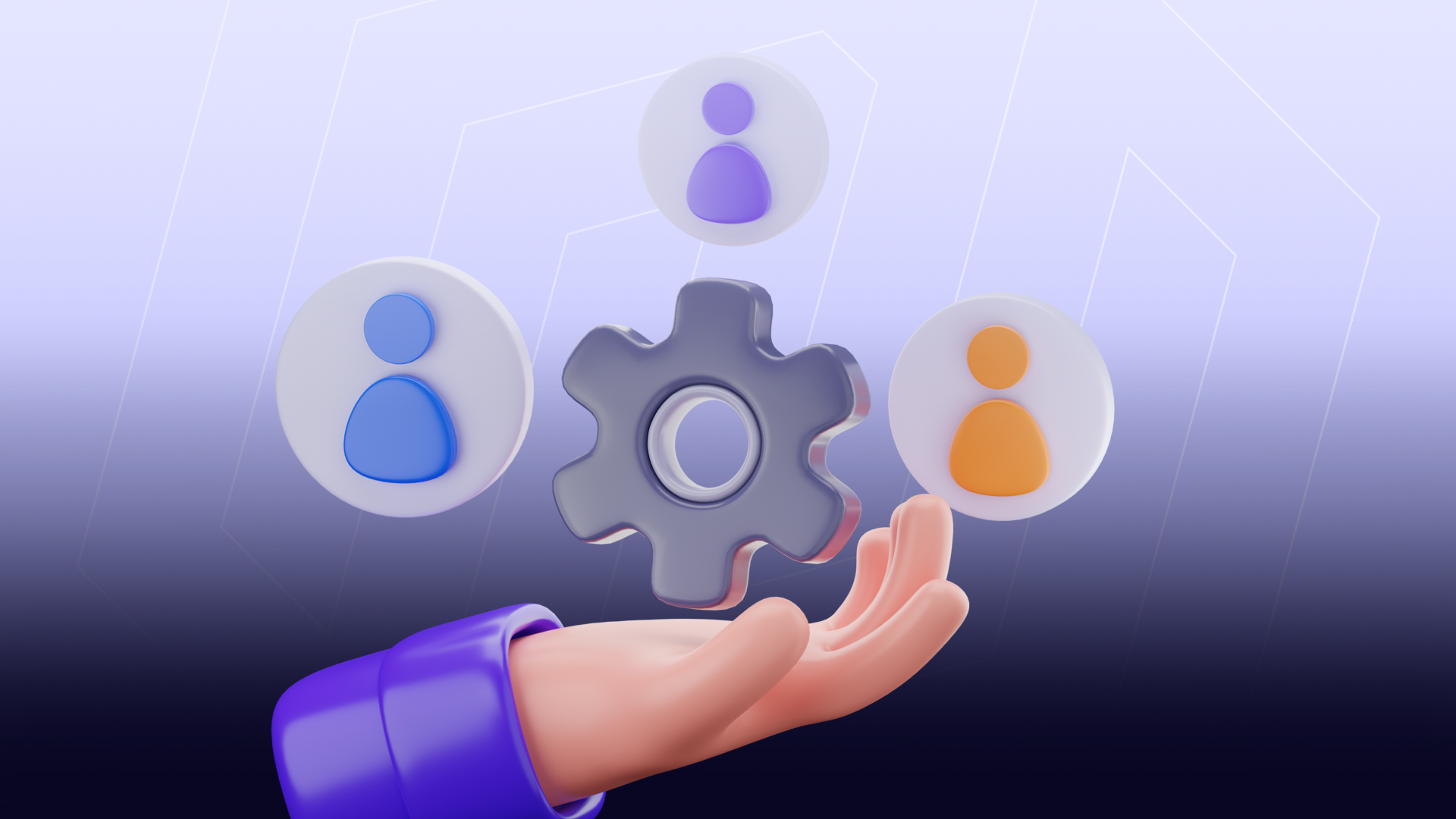
Web3 systems lack a central authority that enforces direction. Instead, communities take on a coordinating role: they determine which behaviors are desirable, which proposals receive support, and which initiatives become viable.
This is particularly visible in Decentralized Autonomous Organizations (DAOs), where governance is largely executed by token holders. However, the effectiveness of such structures depends less on smart contracts and more on social factors:
- Shared norms and values define what “good” participation looks like. Without them, governance discussions fragment into competing factions with no common ground.
- Transparent communication keeps participants aligned on priorities, trade-offs, and progress. Opacity tends to breed speculation and disengagement.
- Trust among participants reduces the coordination cost of collective decisions. High-trust communities can move faster and reach broader consensus than low-trust ones with equivalent governance tooling.
Without this social foundation, formal governance mechanisms often remain inactive or become concentrated in the hands of a small group, a failure mode sometimes called governance capture, where token-weighted voting defaults to whoever holds the most tokens rather than whoever is most engaged.
Web3 Community Building: Platforms Are Tools, Not Communities
Many Web3 projects organize their communities using tools such as Discord, Telegram, and X. While these platforms facilitate interaction, they do not constitute a community by themselves. This distinction matters practically, because projects that optimize for platform metrics like server member counts and follower numbers, often find themselves with large audiences and low actual engagement.
A community emerges only when:
- Members recognize each other and interact repeatedly. Familiarity and repeated interaction build the social bonds that sustain participation over time. A server with 50,000 members but no recurring contributors is not a community, it is an audience.
- Contributions are visible and meaningful. When community members see their input influence decisions, their motivation to contribute increases. Invisible contribution systems produce invisible contributors.
- There is space for knowledge sharing and discussion. Communities that only broadcast announcements suppress the horizontal communication that makes collective intelligence possible. Open discussion channels, AMAs, and public decision logs create the conditions for genuine community formation.
The platform is infrastructure. The community is what forms on top of it, and that formation requires deliberate design, not just the right tooling.
Trust as the Foundation of Web3 Communities
In an environment where projects emerge rapidly, often operate pseudonymously, and lack institutional guarantees, trust plays a central role in community function. Communities act as a social filter: they assess credibility, signal potential risks, and strengthen or weaken reputations in ways that formal verification cannot replicate.
Both research and practice in the Web3 space consistently show that transparent communication, including openly acknowledging uncertainties, setbacks, and unresolved questions, contributes more strongly to community trust than communication focused solely on success narratives. Projects that present a consistent success front tend to lose community confidence more severely when problems surface, precisely because the gap between narrative and reality is larger.
Trust, once lost, is structurally difficult to rebuild in decentralized environments. There is no central authority to issue a correction or reframe a narrative, only the community itself deciding whether to re-engage.
Sustainability and Long-Term Community Engagement
A key distinction between strong and weak Web3 communities becomes visible during unfavorable market conditions. When token prices decline and short-term incentives disappear, communities built primarily on financial motivation tend to dissolve quickly. Sustainable communities remain active, provide feedback, and contribute to further development even when external incentives decline.
This means community strength is not determined by size, but by:
- Continuity of participation — the degree to which the same contributors remain engaged across market cycles, not just during periods of high activity.
- Quality of interaction — whether discussions generate useful signal (product feedback, governance proposals, knowledge exchange) or primarily consist of price speculation and hype.
- Degree of self-organization — whether the community can coordinate and execute initiatives without requiring core team direction. Communities that depend entirely on the founding team for activation are fragile by design.
Projects that invest in these dimensions during favorable conditions are significantly better positioned to survive the periods when external conditions turn against them.
Conclusion
In Web3, communities are not a marketing instrument, they are an essential organizational layer. They enable coordination without centralized control and form the basis for trust, legitimacy, and long-term sustainability.
For Web3 projects, this means that community building is not a secondary concern to be addressed after the protocol is live. It is a strategic prerequisite that determines whether the governance, adoption, and resilience of a project are possible at all.
The practical implication: treat community infrastructure with the same rigor applied to technical infrastructure. Governance without community is a smart contract running in a vacuum. Product without community is a tool with no one to maintain it.
Frequently Asked Questions
What is Web3 community building?
Web3 community building is the process of creating and sustaining an engaged network of users who have a direct stake in a project’s development, through tokens, NFTs, governance rights, or reputation systems. Unlike traditional brand communities, Web3 communities are structural participants in how the project evolves and makes decisions.
Why is community building different in Web3 vs Web2?
In Web2, communities are audiences that consume content. In Web3, community members are active participants who hold governance tokens, vote on proposals, contribute to product development, and have financial stakes in the project. This creates materially different behavior and different requirements for how community strategy must be designed.
What platforms are used for Web3 community building?
Discord and Telegram are the primary platforms for Web3 community management. X (Twitter) handles public narrative and announcements. Farcaster and Lens Protocol are gaining traction among crypto-native audiences. However, platforms are infrastructure. A community only forms when members engage repeatedly, contribute meaningfully, and feel ownership over what they are part of.
What is governance capture in a DAO?
Governance capture is a failure mode in DAO governance where token-weighted voting defaults to whoever holds the most tokens rather than whoever is most engaged with the project. It typically happens when community trust and participation are low, leaving governance decisions effectively controlled by a small group of large holders.
How do you build a Web3 community that survives bear markets?
Sustainable Web3 communities are built around a shared belief or mission, not just financial incentives. They demonstrate continuity of participation, high-quality discussion (governance proposals, product feedback), and self-organization, which is the ability to coordinate initiatives without constant core team direction. Communities built primarily on token price tend to dissolve when markets turn.
Can a crypto marketing agency help with Web3 community building?
Yes. A crypto marketing agency with community management experience can build Discord and Telegram structures, design engagement systems, manage moderation and activation, and set up governance participation frameworks. The key is finding an agency that treats community as a strategic function, not just a content distribution channel.