Quick answer
The best crypto cards in 2026 are led by Bybit for EEA users who want consistent cashback without staking, and OKX for pure fee efficiency at a 0.4% conversion spread. KAST leads on reach and stablecoin cashback for Solana users, while Tria is the most technically advanced option for Web3 natives with self-custody across 200+ chains. Crypto card spending has surged, with Visa reporting a 525% jump in crypto card volume as stablecoin settlement passed $1.1 trillion monthly in 2025. Cryptic is a crypto marketing agency in Dubai, founded in 2020, that helps exchange, DeFi, and payments brands grow.
Why Crypto Cards Matter in 2026
The top crypto cards in 2026 have moved well beyond novelty. Monthly stablecoin settlement volume surpassed $1.1 trillion in 2025, and Visa reported a 525% jump in crypto card spending. That shift is real, and it is now supported by a new generation of cards that offer genuine fee transparency, meaningful cashback, and in some cases full non-custodial architecture.
However, not every crypto card earns its position on that list. Some gate their best rewards behind punishing staking requirements. Others charge conversion fees that quietly erode every transaction. A few are geographically restricted to the point of being irrelevant for most users. In short, choosing the wrong card can cost more than it saves.
This guide ranks the ten best crypto debit and credit cards available in 2026, comparing each on fees, cashback, availability, and custody model. Whether you are a daily spender in Europe, a Solana-native looking to maximise yield, a US-based Coinbase user, or a Web3 builder who needs a card that works across 200 blockchains without switching networks, there is an option here that fits.
What Makes a Great Crypto Card in 2026?
Before comparing specific cards, it helps to know which variables actually determine real-world value. Most crypto card comparisons lead with headline cashback rates and stop there. In practice, four factors determine whether a card saves you money or costs you more than a regular debit card.
Conversion Fees and FX Costs
Every crypto card converts your digital assets to fiat currency at the point of sale. The total cost typically includes a crypto-to-fiat conversion fee charged by the issuer, a foreign exchange markup when you spend in a non-base currency, and network or gas fees when you fund the card on-chain. The cleanest cards, like the OKX Card, charge only a 0.4% market spread with zero FX markup. Others, by contrast, stack multiple fees that add up to 2% or more per transaction before any cashback benefit.
Cashback Structure and Staking Requirements
Headline cashback rates are frequently conditional. Crypto.com’s 5% rate requires staking $40,000 worth of CRO tokens, for example, and rewards paid in volatile native tokens lose value if that token depreciates. The strongest cards for most users are those that deliver consistent cashback without requiring capital to be locked up. Bybit, notably, delivers up to 10% with no staking requirement at all.
Geographic Availability
Several of the most competitive crypto cards are regionally restricted. The OKX Card and Bybit Card are currently EEA-only, and the Coinbase Card is not available in all markets. RedotPay and Crypto.com, on the other hand, offer the widest geographic coverage. Always verify your country is supported before comparing fees.
Custody Model
Custodial cards, which include most exchange-issued products, hold your assets on the platform’s balance sheet until you spend. Non-custodial cards like ether.fi Cash and Tria instead keep your assets in a self-custodial wallet until the moment of transaction. For users who hold significant balances, non-custodial architecture eliminates platform counterparty risk as a factor.
Top 10 Crypto Cards at a Glance
The table below summarises the key criteria. Detailed breakdowns for each card follow.
| Card | Cashback | Key Fees | Best For |
|---|---|---|---|
| Bybit Card | Up to 10%, no staking | 0.9% conversion, 0.5% FX | Best overall, EEA and Australia |
| OKX Card | Varies by VIP tier | 0.4% spread, no FX fee | Lowest-fee stablecoin spending (EEA) |
| Coinbase Card | 1% to 4% in crypto | No annual or spending fee | US users |
| Nexo Card | Up to 2% NEXO / 0.5% BTC | Credit APR from 2.9% | Borrowing without selling |
| Crypto.com Card | 0% to 5% in CRO | No annual or FX fee | Global reach, 180+ countries |
| ether.fi Cash | 3% on all purchases | 1% FX, 2% ATM | Non-custodial DeFi credit card |
| KAST Card | Up to 5% in USD stablecoin | 0.5% to 1.75% FX | Solana users, global reach |
| RedotPay Card | None ongoing | 1% conversion, 1.2% FX | High limits, Asia-Pacific |
| Karta Personal | None | Zero top-up, 0.5% FX | Freelancers, zero-fee stablecoin |
| Tria Card | Up to 6% at premium tiers | $20 virtual issuance | Web3 natives, 200+ chains |
1. Bybit Card
Best overall crypto card, strong cashback, no staking.
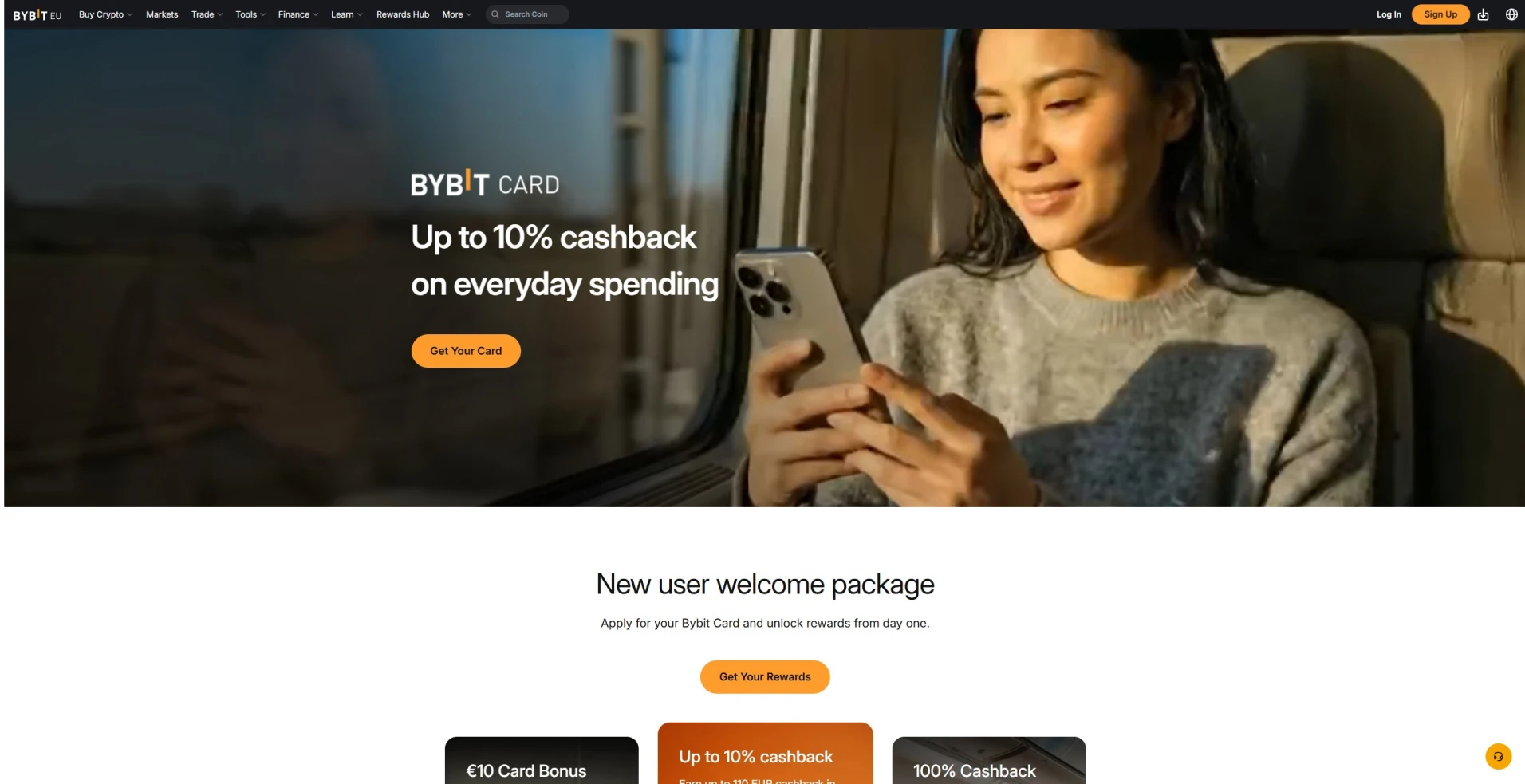
The Bybit Card leads this list because it solves the most common frustration in the crypto card market: delivering strong rewards without requiring users to stake or lock tokens. Most competing cards that offer cashback above 3% gate those benefits behind staking requirements, native token exposure, or complex tier systems. Bybit does none of that. Instead, the card is a Mastercard debit card available to EEA and Australia users, linked directly to a Bybit exchange account, with cashback reaching up to 10% through its loyalty points programme.
A second differentiator is the Auto-Savings function, which earns interest on Flexible Savings balances linked to the card. Most crypto debit cards earn nothing on idle balances. Bybit’s design, by contrast, means your holdings generate yield in the time between deposits and spending, which compounds the card’s effective return significantly for regular users.
Key details
- Network: Mastercard
- Cashback: Up to 10% via loyalty points, no staking required
- Auto-Savings: Earn interest on Flexible Savings linked to card balance
- Supported assets: BTC, ETH, XRP, USDT, USDC
- Annual fee: None
- Conversion fee: 0.9% plus spot fees
- FX fee: 0.5% over Mastercard rate
- ATM: Free up to 100 EUR/GBP monthly, 2% after
- Availability: EEA countries and Australia
2. OKX Card
Best for zero-fee stablecoin spending in Europe.
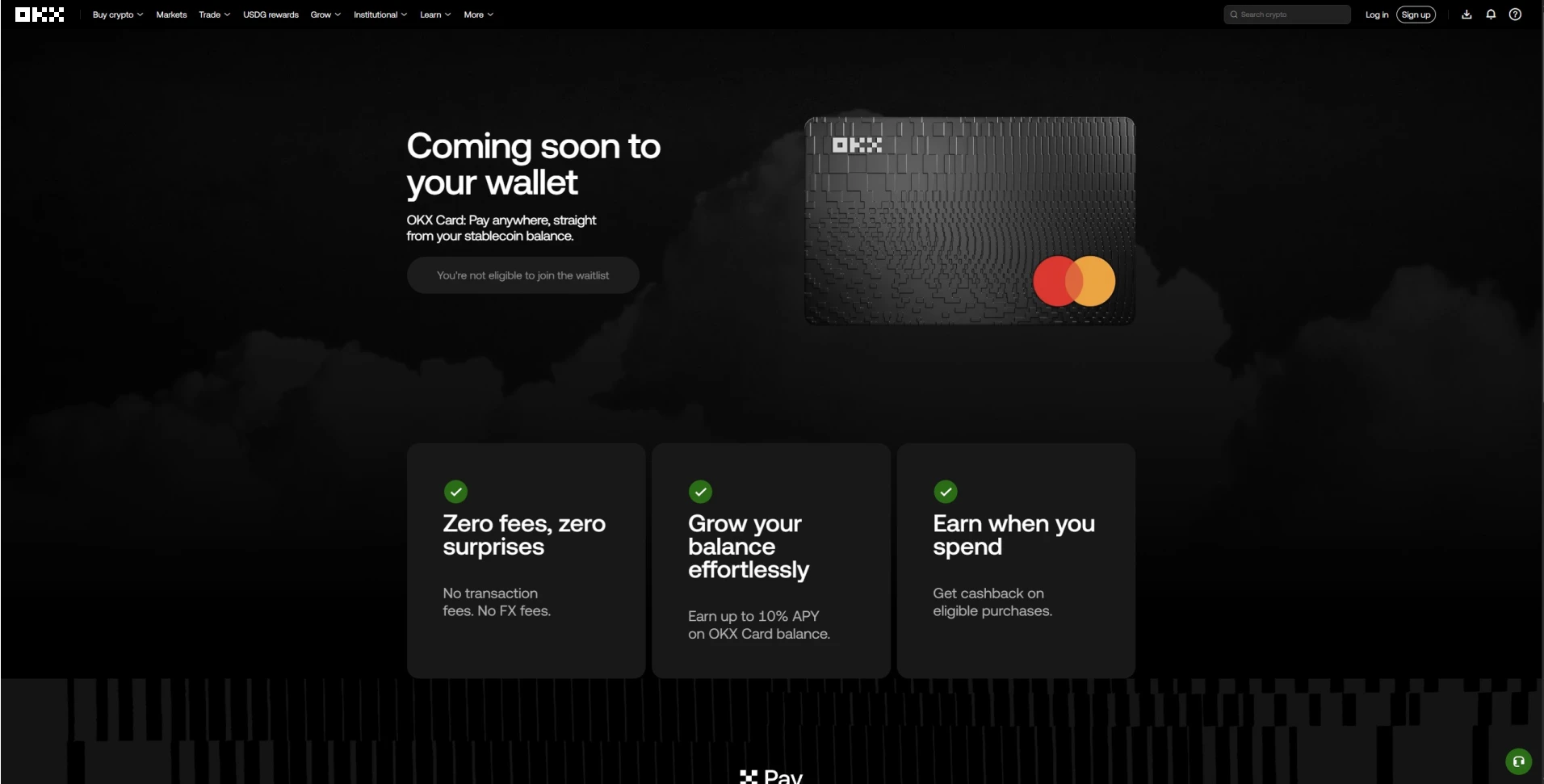
The OKX Card launched across the EEA in early 2026 as part of OKX Pay, and its fee structure sets a new benchmark for transparent crypto card costs. OKX charges zero transaction fees, zero FX markup on card spending, and only a 0.4% market spread on the stablecoin-to-euro conversion itself. That spread reflects the mechanics of the conversion rather than a card surcharge. With no annual fees, no monthly fees, no issuance fees, and no inactivity charges, it is the lowest-cost everyday spending mechanism available for EEA stablecoin holders.
The cashback programme requires attention to structure. During launch periods, OKX offered up to 20% cashback on USDG purchases, with rates varying by VIP tier. As of March 2026, ongoing cashback applies to USDG purchases at rates determined by VIP level. Standard users may receive limited ongoing cashback outside promotions, and the card is virtual-only at time of publication.
Key details
- Network: Mastercard
- Annual fee: None
- Conversion spread: 0.4% only, no FX fee
- Cashback: Up to 20% during promotions; ongoing rates vary by VIP tier
- Yield on USDG: Up to 4.1% APY in OKX Pay
- Custody: Non-custodial smart wallet until transaction
- Availability: Most EEA countries (virtual card only)
3. Coinbase Card
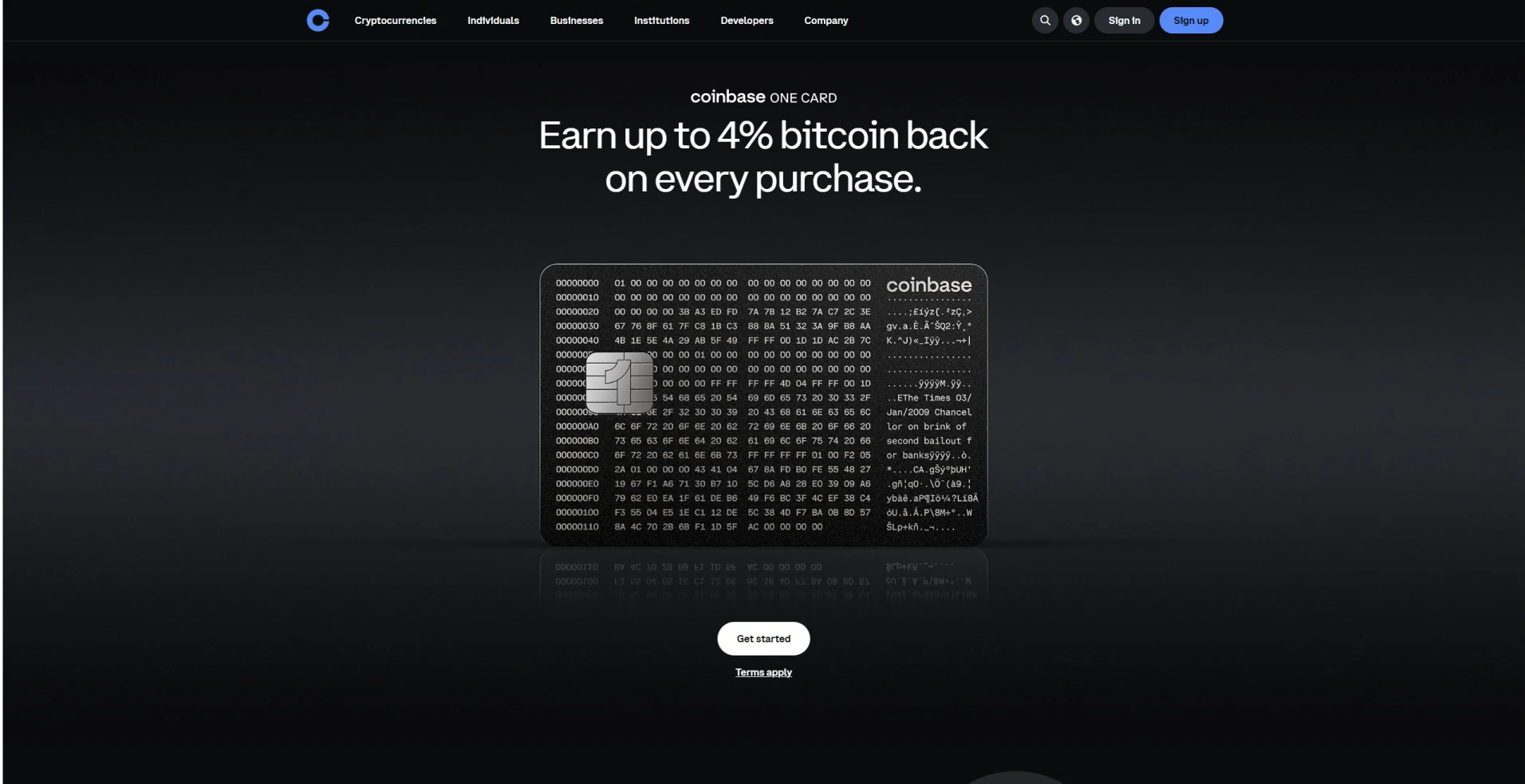
Best crypto card for US users, zero fees, broad asset support.
The Coinbase Card is the most accessible entry point for US-based crypto holders who want to spend digital assets without managing a separate wallet or incurring hidden fees. It is a Visa debit card that draws directly on Coinbase account balances, converting crypto to fiat at the point of sale with no annual fee, no spending fee, and no minimum balance. In addition, the card earns 1% to 4% cashback in cryptocurrency, with users choosing their preferred reward asset.
Coinbase is also rolling out the Coinbase One Card, a credit card offering up to 4% back in Bitcoin, tiered by total assets held on the platform, for subscribers paying $4.99 per month. For users already on the Coinbase One plan, this represents a meaningful cashback upgrade with no additional cost beyond the existing subscription.
Key details
- Network: Visa
- Annual fee: None
- Spending fee: None
- Cashback: 1% to 4% in cryptocurrency, no staking required
- Supported assets: BTC, ETH, USDC, and most Coinbase-listed tokens
- Availability: US, Europe, UK (excluding Hawaii)
4. Nexo Card
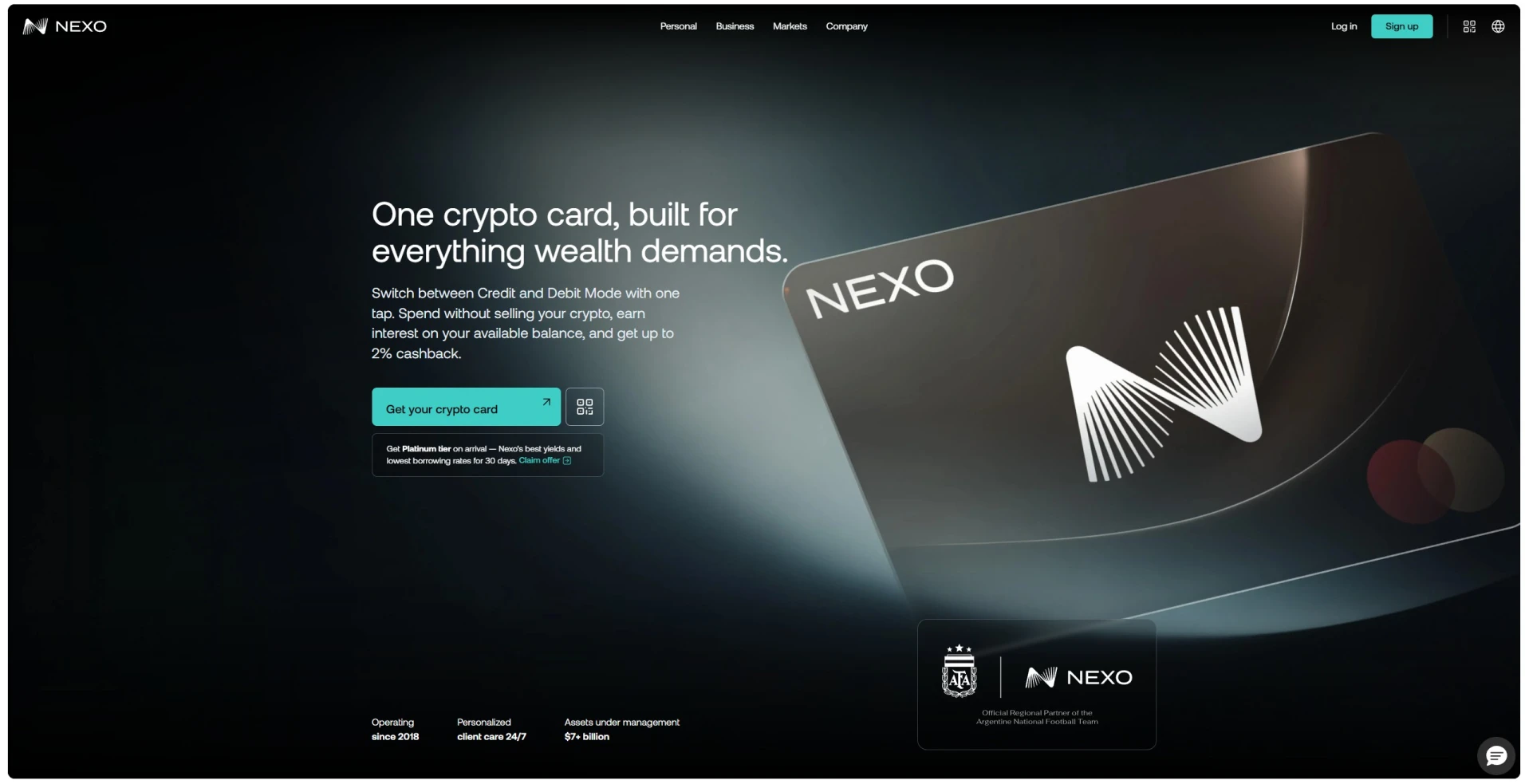
Best crypto card for borrowing without selling.
The Nexo Card occupies a structurally distinct position because it is the only dual-mode card on this list: users can switch between spending crypto directly (debit mode) and borrowing against crypto collateral without selling it (credit mode). Credit mode lets holders maintain exposure to their assets’ upside while accessing a spending line, with borrowing rates starting at 2.9% per annum. As a result, it is the most relevant card for users who hold Bitcoin or Ethereum long-term and want liquidity without triggering a taxable disposal event.
In credit mode, users earn up to 2% cashback in NEXO tokens or 0.5% in BTC on purchases. Debit mode, meanwhile, earns daily compound interest of up to 14% on the balance, and users can set which assets to spend first. The physical card is free for Gold Loyalty tier users with a portfolio balance of at least $500.
Key details
- Network: Visa
- Modes: Credit (borrow against collateral) and debit (spend directly)
- Credit mode APR: 2.9% to 18.9% depending on loyalty tier
- Cashback: Up to 2% in NEXO or 0.5% in BTC (credit mode)
- Debit mode yield: Up to 14% compound interest on balance
- ATM: Free up to 2,000 EUR/GBP monthly, 2% after
- Availability: EEA and UK
5. Crypto.com Card
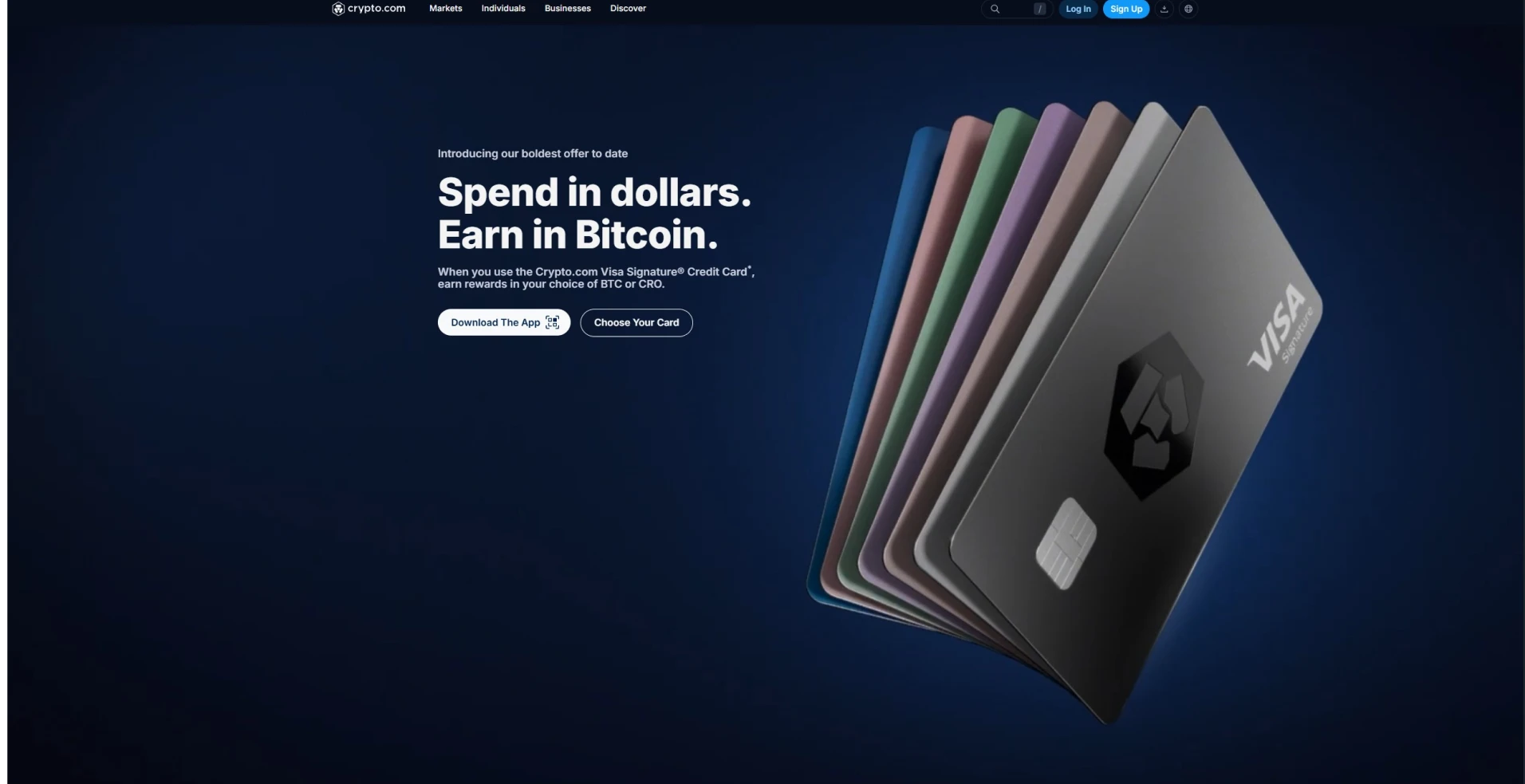
Best crypto card for global reach across 180+ countries.
Crypto.com offers the most geographically broad crypto card on this list, with Visa acceptance across 180+ countries. Its tier system ranges from a free entry card requiring no staking through to premium metal cards offering 5% cashback in CRO plus perks including Netflix, Spotify, and airport lounge access. The card charges no annual fee and no foreign transaction fee across all tiers, which makes it competitive on costs even before accounting for rewards.
The central trade-off is staking. Access to meaningful cashback requires locking CRO tokens for a minimum of six months. The entry card requires no staking but offers no cashback, while higher tiers require staking progressively larger CRO amounts, creating exposure to CRO price risk during the lock-up. For users already holding CRO, this cost is minimal. For users who want rewards without native token exposure, however, alternatives on this list offer better flexibility.
Key details
- Network: Visa
- Annual fee: None across all tiers
- Cashback: 0% (no stake) to 5% in CRO at higher tiers
- Staking: 350 CRO to 350,000 CRO for 6 months depending on tier
- ATM: Free up to $200/month on most tiers
- Availability: 180+ countries
6. ether.fi Cash
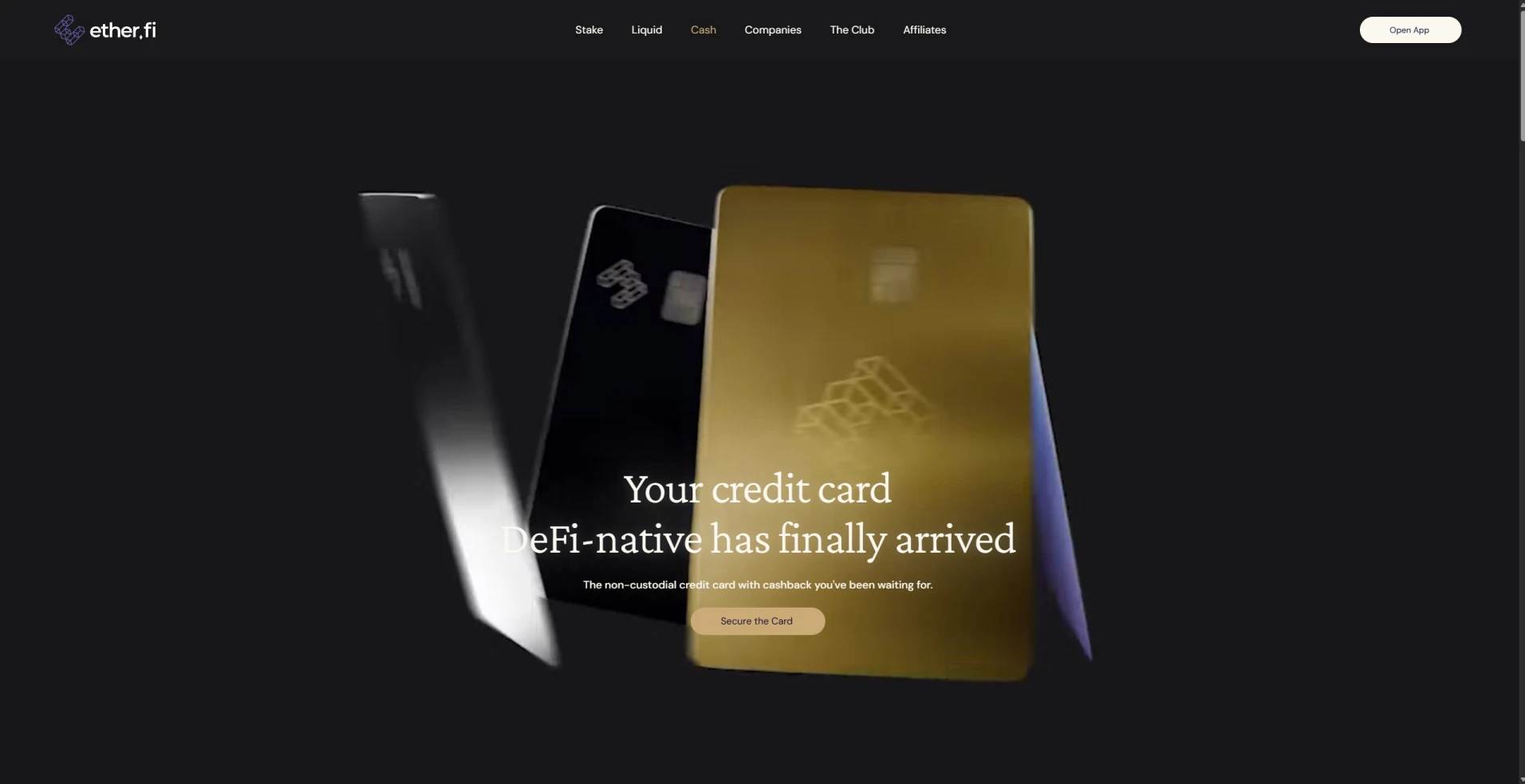
Best non-custodial crypto credit card for DeFi users.
The ether.fi Cash card is the only genuine credit card with non-custodial architecture on this list. Users post crypto as collateral and spend against it via a Visa card accepted anywhere Visa operates globally. Their underlying assets remain in a self-custodial wallet at all times, since ether.fi holds no access to the keys. This eliminates platform counterparty risk on the collateral, which is a meaningful structural advantage for users who hold significant on-chain positions.
The card runs across four tiers, Core, Luxe, Pinnacle, and VIP by invitation, with 3% cashback on all purchases across all tiers at launch. No annual fee applies to Core or Luxe tiers. Gasless transactions are built in, so users do not pay gas fees for card account activity. The 1% FX fee and 2% ATM fee apply uniformly across tiers.
Key details
- Network: Visa
- Custody: Non-custodial, keys remain with user
- Cashback: 3% on all purchases at launch
- Annual fee: None on Core and Luxe tiers
- FX fee: 1%
- ATM: 2% fixed, max 3 withdrawals per day
- Availability: Global wherever Visa is accepted
7. KAST Card
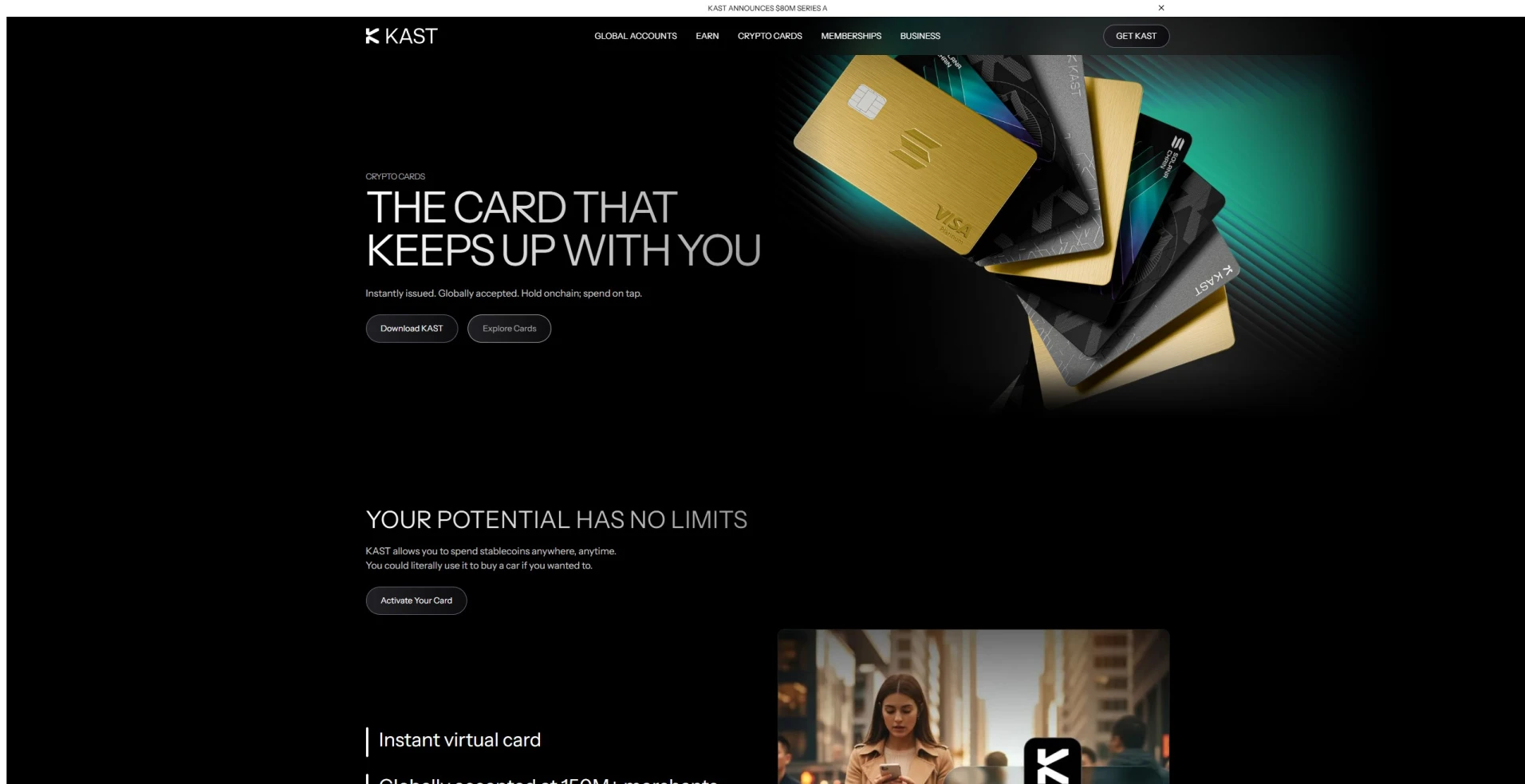
Best crypto card for Solana users and global stablecoin spending.
KAST is a stablecoin-native payment platform built around Visa infrastructure with particularly deep Solana ecosystem integration. It operates across 170+ countries with acceptance at 150 million merchants. Following a May 2026 restructure, KAST rewards are paid in USD stablecoin cashback, reaching up to 5% on higher tiers, with uncapped KAST Points stacking on paid tiers. The Standard card is free, which makes the entry tier genuinely competitive with premium cards elsewhere.
The platform also provides US bank account numbers and routing numbers without requiring US residency, which makes it particularly useful for international freelancers and remote workers who receive USD payments from American clients. In addition, SOL staking through the KAST validator adds 3.5% to 21% APY on top of card rewards, depending on tier and stake amount.
Key details
- Network: Visa
- Countries: 170+ globally
- Cashback: Up to 5% in USD stablecoin, plus uncapped KAST Points on paid tiers
- SOL staking APY: 3.5% to 21% depending on tier
- FX fee: 0.5% to 1.75% on non-USD transactions
- Annual fee: Free Standard card; up to $10,000 for top tiers
- ATM: $3 flat plus 2%, higher than most competitors
- Note: Availability varies by jurisdiction, confirm your country before applying
8. RedotPay Card
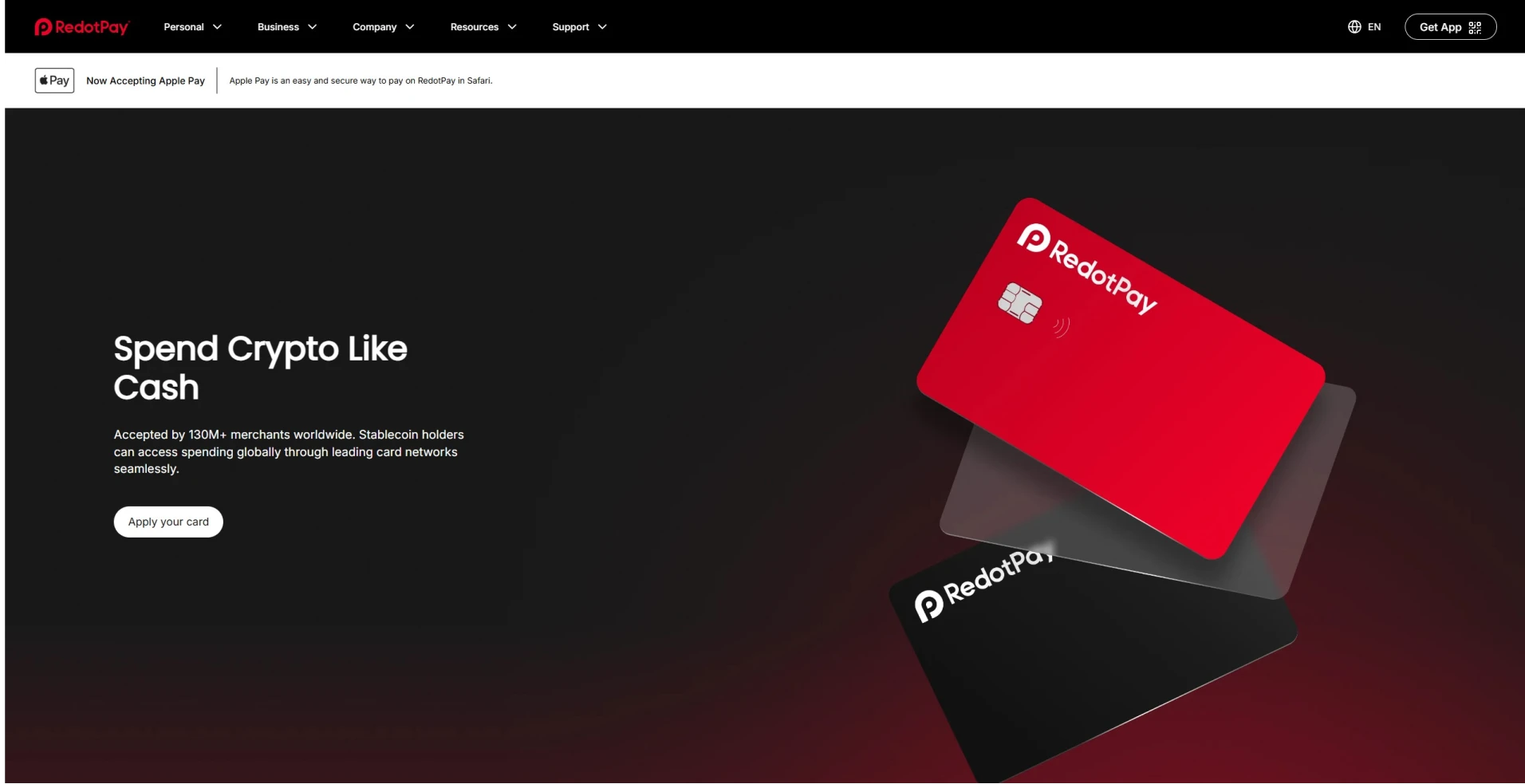
Best crypto card for high transaction limits and Asia-Pacific reach.
RedotPay is built for a different use case than most cards on this list: extreme transaction scale and geographic breadth rather than rewards optimisation. The card processes over $10 billion in annualised payment volume across 6 million users in 100+ countries, with transaction limits that reach $100,000 per transaction and $1 million per day. These figures are orders of magnitude above any other card on this list, positioning RedotPay as the go-to choice for high-volume spenders and businesses operating across Asia, MENA, and global markets that other cards do not serve.
The trade-off is cost structure and the absence of ongoing cashback. The card charges a $10 issuance fee for virtual, $100 for physical, a 1% crypto conversion fee, and a 1.2% FX markup. No standing cashback programme exists, though promotional campaigns have offered limited-time rewards. Integration with Apple Pay, Google Pay, Samsung Pay, PayPal, and Telegram makes it operationally flexible across payment contexts.
Key details
- Network: Visa
- Countries: 100+ globally
- Transaction limits: $100,000 per transaction, $1,000,000 per day
- Issuance fee: $10 virtual, $100 physical
- Conversion fee: 1%
- FX fee: 1.2%
- ATM: 2% to 3%
- Cashback: None ongoing; promotional rates on specific product launches
9. Karta Personal
Best crypto card for freelancers, zero-fee stablecoin spending.
Karta Personal launched in August 2025 as the individual-facing product from Karta.io, a company that built enterprise payment infrastructure for businesses before extending to consumers. The card runs on Visa, issued by Banco Popular de Puerto Rico (FDIC-insured), and is built around a single principle: top up with USDT or USDC at zero fee and spend globally without tier complexity, staking requirements, or lock-ups.
The platform is designed explicitly for freelancers, digital nomads, and remote workers who earn in stablecoins and need a spending account that works globally without traditional banking dependency. Built-in MCC-level analytics let users track expenses by merchant category, and both virtual and physical cards are available. The enterprise-grade infrastructure behind the consumer product gives it a reliability floor that purely consumer-first competitors are still building toward.
Key details
- Network: Visa (FDIC-insured issuer)
- Top-up fee: Zero for USDT and USDC
- FX fee: 0.5%
- Annual fee: None
- Virtual card issuance: $4
- Apple Pay / Google Pay: Yes
- Best for: Freelancers, digital nomads, remote workers accepting USD stablecoin payments
10. Tria Card
Best Web3-native card, self-custody across 200+ chains.
Tria is the most technically ambitious crypto card in this list. It is a self-custodial neobank backed by $12 million in pre-seed funding from Polygon Ventures, Aptos Labs, G1 Ventures, and Wintermute’s co-founder, with a TGE in 2026. Its core differentiator is chain abstraction: users hold assets across 200+ blockchains and spend from any of them via a single Visa card, without manually switching networks, paying gas fees, or managing multiple wallets. Assets remain in a self-custodial wallet until the moment of transaction.
In its first four months of operation, Tria processed $29 million in Visa card volume, representing a significant share of total Visa crypto card volume tracked in 2025. The BestPath AVS routing engine selects the optimal conversion path across chains automatically. Card tiers offer up to 6% cashback, and on-chain yield of up to 15% is available through integrated DeFi positions. The $20 virtual card issuance fee is the main barrier to entry for curious users testing the product.
Key details
- Network: Visa
- Countries: 130+
- Custody: Non-custodial, self-custody wallet until transaction
- Chain support: 200+ chains via BestPath abstraction layer
- Cashback: Up to 6% at premium tiers
- On-chain yield: Up to 15%
- Virtual card issuance: $20
- Annual fee: None post-issuance
- Status: Beta with waitlist; $12M pre-seed funded
How to Choose the Right Crypto Card in 2026
The right card depends on three things: where you are, how you hold your assets, and what you value most from the spending experience. Use the framework below to filter quickly.
Location
- EEA or Australia: Start with Bybit for consistent rewards or OKX for lowest fees. Both require EEA residency.
- United States: Coinbase Card is the most accessible starting point with zero fees and broad asset support.
- Global or Asia-Pacific: RedotPay and Crypto.com have the widest geographic coverage.
- 170+ countries: KAST covers a wide range of markets, though availability varies by jurisdiction.
Asset Profile
- Stablecoin holder spending USD/EUR: OKX Card (EEA) or Karta Personal for zero-fee top-up and spending.
- Solana ecosystem user: KAST combines card spending with SOL staking rewards in a single platform.
- Long-term Bitcoin or ETH holder: Nexo allows spending without selling through its collateralised credit mode.
- Multi-chain Web3 power user: Tria’s chain abstraction layer eliminates the need to manage separate wallets per chain.
Priority
- Maximum cashback, no staking: Bybit delivers up to 10% with no lock-up requirement.
- Lowest overall cost: OKX Card charges only a 0.4% conversion spread with zero other fees.
- Self-custody: ether.fi Cash (credit) or Tria (debit) keep assets in user-controlled wallets.
- High spending limits: RedotPay supports $100K per transaction and $1M per day.
How Cryptic Helps Web3 Brands Grow
Cryptic is a crypto marketing agency with offices in Amsterdam, Dubai, London, and Riyadh, founded in 2020 and a verified Circle Alliance Partner. We have worked with clients including Binance, Bybit, OKX, Algorand and Canton. For Web3 projects building in the exchange, DeFi, or payments space, we build the marketing infrastructure that creates market presence, from user acquisition and authority-building PR to content that earns discovery long after launch. In a crowded card and payments market, clear positioning is how brands turn a product into an audience.
Book a strategy call with Cryptic →
Frequently Asked Questions
What is a crypto card and how does it work?
A crypto card is a Visa or Mastercard payment card linked to a cryptocurrency wallet or exchange account. When you spend, it automatically converts your digital assets to fiat currency at the point of sale. You pay the merchant in local currency while your crypto balance is debited. Most cards also offer cashback rewards paid in cryptocurrency or stablecoin.
Which crypto card has the best cashback in 2026?
Bybit delivers up to 10% through its loyalty programme with no token lock-up required, which makes it the strongest option for consistent ongoing cashback. OKX offers up to 20% during promotional periods for EEA users, while KAST pays up to 5% in USD stablecoin with uncapped KAST Points on paid tiers. Always compare the ongoing rate rather than the promotional headline.
Are crypto cards safe to use?
Yes, provided you use a reputable issuer. Cards from major exchanges like Bybit, OKX, and Coinbase include chip and PIN, two-factor authentication, and real-time transaction alerts. Non-custodial options like ether.fi Cash and Tria add an extra layer of security by keeping your assets in a self-custodial wallet until the moment of transaction.
Do I need to convert crypto before spending with a crypto card?
No. The conversion happens automatically at point of sale. You hold your balance in crypto or stablecoins, and the card converts to local fiat currency in real time when you tap or swipe. You never need to manually off-ramp in advance.
Are there tax implications for spending crypto with a card?
In most jurisdictions, spending cryptocurrency is treated as a taxable disposal event. Any gain between your acquisition cost and the value at the time of spending may be taxable. Tax treatment varies by country, so consult a qualified tax professional before using a crypto card regularly for significant purchases.
Which crypto card is best for users outside the US and Europe?
RedotPay covers 100+ countries globally with strong adoption in Asia-Pacific. Crypto.com operates in 180+ countries, and KAST supports 170+ countries. RedotPay is particularly well-suited to high-volume spenders in markets where other cards have limited availability.