Building a crypto startup in 2026 is not the same game it was in 2021.
The easy money is gone. Retail speculation has cooled. VCs are more selective. And the projects that are actually getting funded, launched, and scaled are the ones backed by serious infrastructure, not just a whitepaper and a Telegram group.
That is where crypto incubators come in.
The best crypto incubators in 2026 do not just write checks. They provide technical mentorship, tokenomics design support, legal guidance, ecosystem connections, and in many cases, a direct path to exchange listings and institutional investors. For a founder trying to go from idea to launch in a market that has seen everything, that kind of structured support is the difference between a project that ships and one that stalls.
This guide covers the top blockchain incubator and accelerator programs worth applying to in 2026, what each one offers, who they are designed for, and how to position your project for the best shot at getting in.
Why Crypto Incubators Matter More Than Ever in 2026
The 2022 and 2023 bear market did something important to the crypto startup ecosystem. It killed the noise. Projects that were built on hype without substance collapsed, and the infrastructure that survived came out more credible and more selective.
In 2026, the bar for launching a successful crypto project has risen considerably. Regulatory clarity in major markets means compliance is no longer optional. Institutional capital expects proper due diligence, structured cap tables, and audited smart contracts. Retail investors, burned by previous cycles, are more skeptical of anonymous teams with no backing.
Incubators and accelerators solve multiple problems at once. They provide credibility by association, technical resources that would otherwise take months to source independently, and warm introductions to capital that cold outreach cannot replicate. For early stage founders, acceptance into a top program is often the most valuable signal a project can send to the market.
What to Look for in a Crypto Incubator
Before applying to any program, founders need to evaluate incubators against a clear set of criteria. Here is the framework used to assess every program on this list.
Funding and Equity Terms: Some incubators offer non-dilutive grants. Others take equity, token allocations, or both. Understanding the true cost of the capital before signing anything is non-negotiable. A check that comes with 15% token allocation at launch can be significantly more expensive than it appears on day one.
Network and Ecosystem Access: The check matters less than the network behind it. The best programs connect founders directly to exchanges, market makers, institutional investors, legal firms, and other portfolio companies. That warm network is often worth more than the initial funding.
Mentorship Quality: Generic startup advice does not move the needle in crypto. Look for programs where the mentors have direct, verifiable experience building or investing in blockchain projects. Former protocol founders, experienced tokenomics designers, and on-chain legal specialists are the profiles that matter.
Track Record of Alumni The strongest signal of a good incubator is what its alumni have built. Research the portfolio. If the graduated projects are live, generating real volume, and backed by credible follow-on investors, the program is doing something right.
Stage and Vertical Focus: Some incubators are generalists. Others focus specifically on DeFi, gaming, infrastructure, or consumer applications. Applying to a program that is aligned with your vertical significantly improves both your chances of acceptance and the relevance of the support you receive.
Best Crypto Incubators in 2026 At a Glance
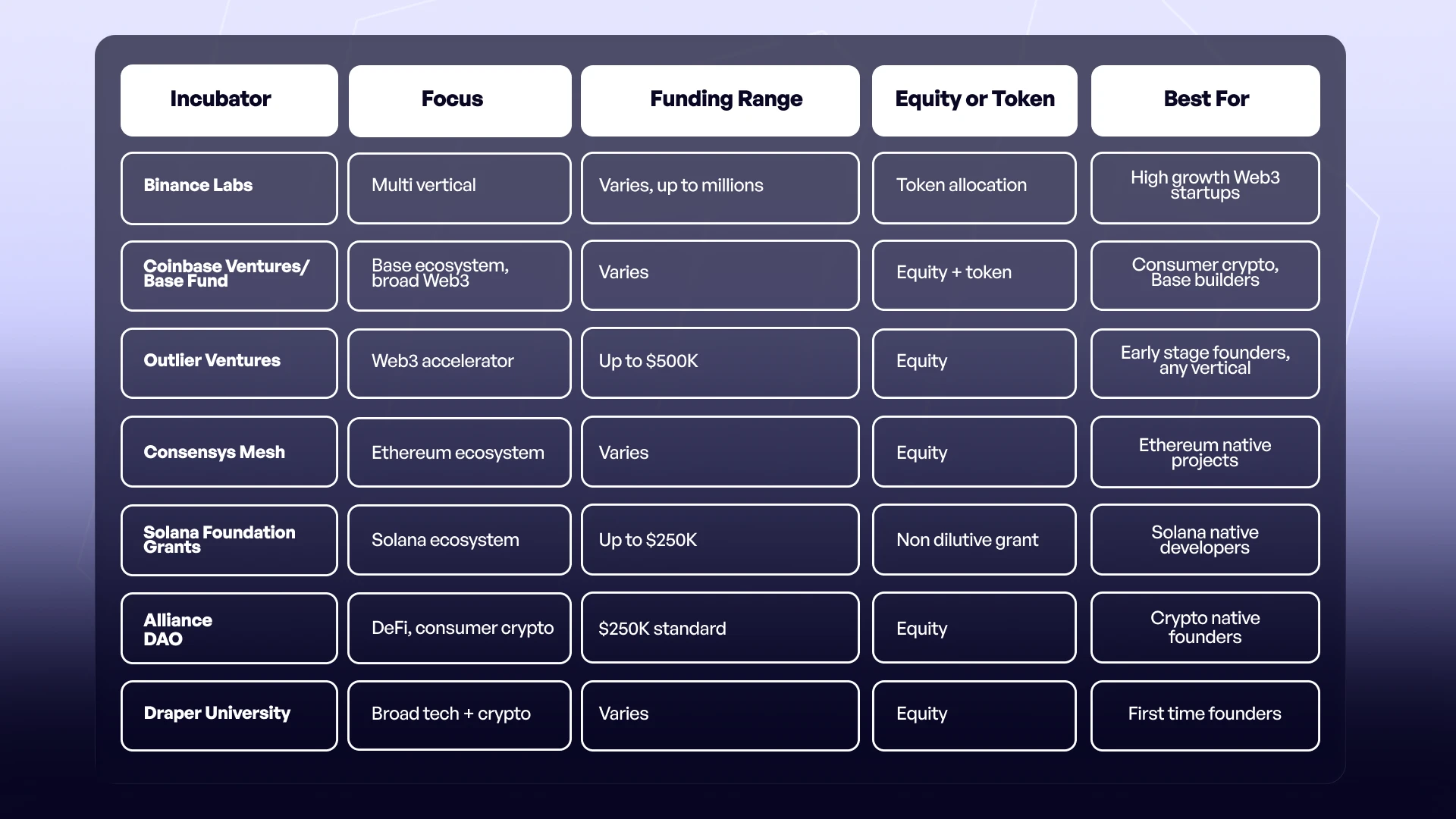
The Best Crypto Incubators in 2026: Ranked
YZi Labs (formerly Binance Labs)
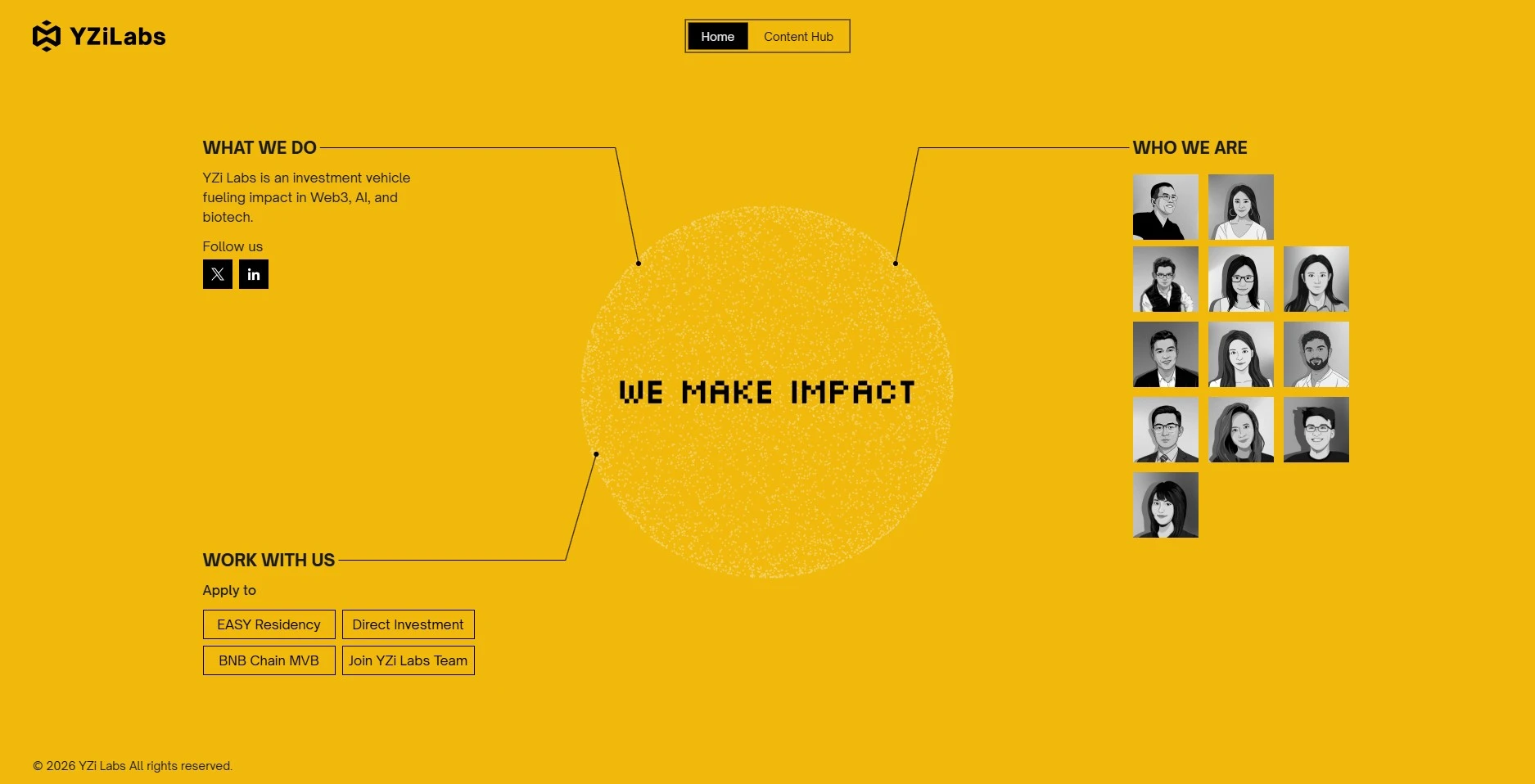
YZi Labs is the venture and incubation arm of Binance, and by most measures, it remains one of the most powerful accelerator programs in the entire crypto industry. The scale of the Binance ecosystem gives portfolio companies an immediate advantage that no other incubator can replicate. Access to Binance exchange listings, Launchpad and Launchpool integrations, BNB Chain infrastructure, and a global network of institutional partners creates a launchpad that operates at a different level than most programs.
The incubation program itself is structured in phases, moving from early-stage ideation support through to token launch readiness. Mentorship covers technical architecture, tokenomics design, go to market strategy, community building, and regulatory navigation. The program is highly selective, and the application process reflects that. Binance Labs looks for teams with strong technical credentials, a clearly differentiated product thesis, and evidence that the founders understand the specific market they are entering.
For projects that clear the bar, the association with Binance Labs carries meaningful weight with follow-on investors and exchange partners across the industry. Portfolio companies have included some of the most successful launches of the past three years across DeFi, gaming, infrastructure, and consumer crypto.
Best for: High-growth Web3 startups with strong technical teams and a clear product differentiation
Focus: Multi-vertical, global
Funding: Varies by stage and project, can reach into the millions for later-stage investments
Watch out for: The program is intensely competitive. Projects need to be well developed before applying, not at the whitepaper stage
Coinbase Ventures
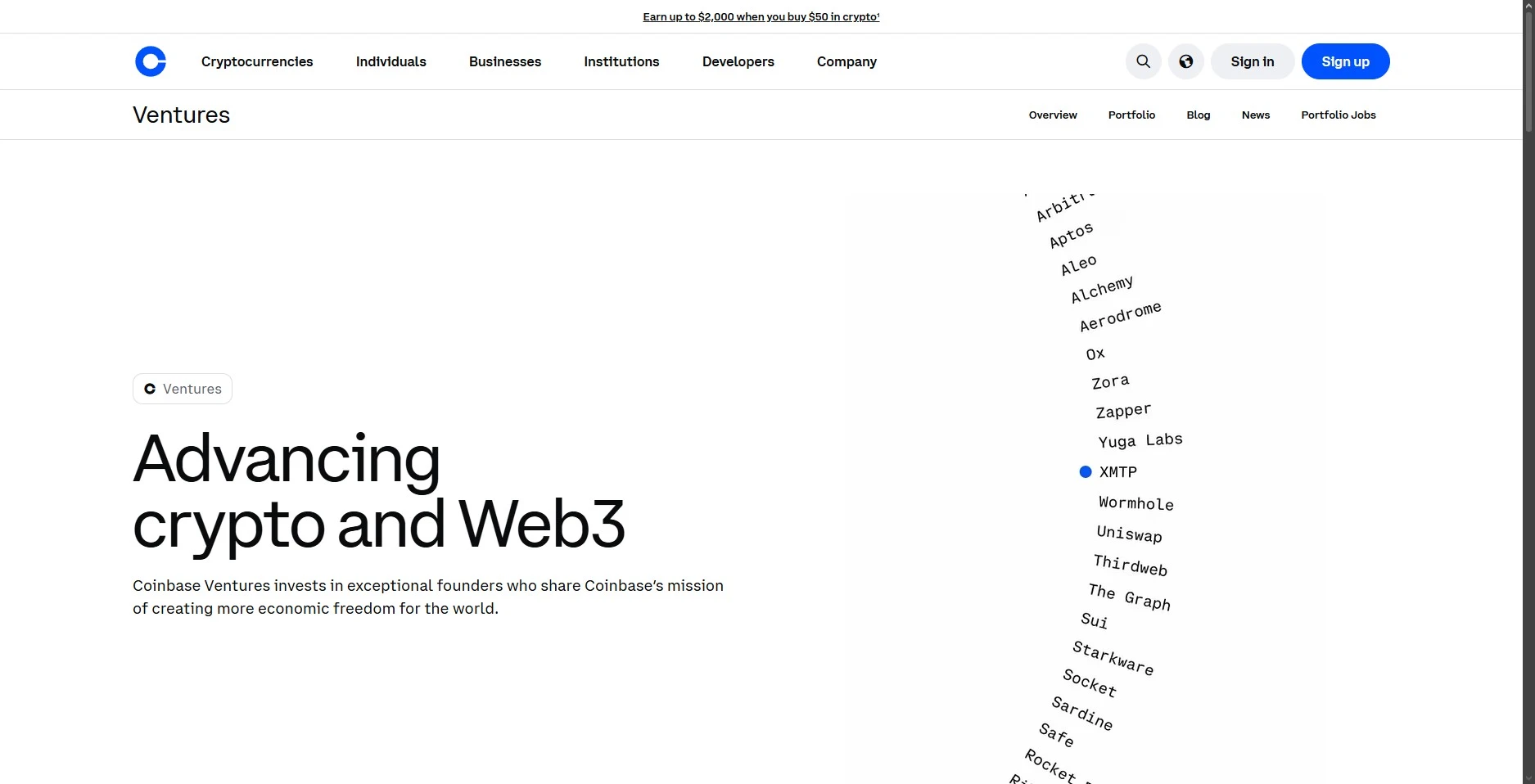
Coinbase Ventures operates as the investment arm of Coinbase, writing checks across a broad range of Web3 verticals with a particular emphasis on projects that expand crypto’s accessibility to mainstream users. The portfolio spans DeFi infrastructure, wallets, developer tooling, compliance technology, and consumer applications.
The Base Ecosystem Fund is the more focused and newer counterpart, specifically designed to accelerate projects building on Base, Coinbase’s Ethereum L2. As Base has grown into one of the most active L2 ecosystems in 2026, the fund has become a significant entry point for founders who want to build within that ecosystem with direct support from the team that built the chain.
What distinguishes the Coinbase network from other incubators is the regulatory credibility it carries. Coinbase operates as a publicly listed company with an established compliance infrastructure, and that association provides portfolio companies with a level of institutional legitimacy that is increasingly valuable in 2026’s more regulated environment. For founders building consumer-facing products, the potential distribution through Coinbase’s user base adds another dimension to the relationship.
Best for: Consumer crypto founders, Base ecosystem builders, and projects that benefit from regulatory credibility and mainstream distribution
Focus: Consumer crypto, DeFi, Base ecosystem, developer tooling
Funding: Varies by stage and relationship
Watch out for: Coinbase Ventures is primarily an investor rather than a hands on accelerator. Founders looking for structured mentorship programs should look at Outlier Ventures or Alliance DAO alongside this
Outlier Ventures

Outlier Ventures is one of the longest-running Web3 accelerators in the world, and it has built a reputation for working with genuinely early-stage founders rather than requiring a near-finished product before accepting applications. The Base Camp program is their flagship accelerator, running cohort-based programs that take teams from concept through to investor ready in a structured twelve week format.
The program covers tokenomics design, legal and regulatory strategy, go to market planning, fundraising preparation, and community building. Mentors include experienced Web3 founders, token economists, and legal specialists who work directly with cohort teams rather than offering generic startup advice.
Outlier Ventures takes an equity stake in exchange for the program, which is a standard structure for this type of accelerator. The network they bring to the table, including connections to follow on investors, exchange partners, and a global alumni community, is what makes that equity meaningful. The program has produced a consistent stream of funded projects across DeFi, NFTs, gaming, and infrastructure, and the alumni network is active and genuinely useful for post program fundraising.
Best for: Early stage Web3 founders across any vertical who need structured support from concept to investor readiness
Focus: Generalist Web3 with vertical specific cohorts
Funding: Up to approximately $500K in combined support and funding
Watch out for: The cohort model means timing matters. Applications open on a rolling basis, and founders should research upcoming cohort themes to maximize fit
Consensys Mesh

Consensys Mesh is the company behind MetaMask, Infura, and a portfolio of foundational Ethereum infrastructure tools. It is the internal venture and incubation arm, focused specifically on projects building within and around the Ethereum ecosystem.
The Mesh model is different from a traditional accelerator. Rather than running cohort programs, it operates more like a venture studio, working closely with early-stage teams over an extended period to help them build, iterate, and scale. Portfolio companies get access to Consensys engineering resources, legal support, the MetaMask and Infura networks, and direct connections to the institutional investor relationships Consensys has built over years of operating at the center of Ethereum.
For projects building Ethereum native infrastructure, developer tooling, or applications that benefit from deep integration with the MetaMask ecosystem, Consensys Mesh offers a level of technical depth that generalist incubators simply cannot match. The trade off is that the program is specifically focused on the Ethereum ecosystem, making it a strong fit for some projects and irrelevant for others.
Best for: Ethereum native projects, developer tooling builders, and teams that benefit from deep integration with MetaMask and Infura infrastructure
Focus: Ethereum ecosystem
Funding: Varies by project and relationship
Watch out for: Strong Ethereum alignment is a prerequisite. Projects building on other chains will not find a natural fit here
Polygon Labs

Polygon has positioned itself as one of the most builder-friendly ecosystems in 2026, and the Polygon Labs Ecosystem Fund is a central part of that strategy. The fund provides capital, technical support, and ecosystem connections to projects building on Polygon’s growing suite of infrastructure, including Polygon PoS, Polygon zkEVM, and the AggLayer cross-chain interoperability system.
The fund operates through a combination of direct grants, equity investments, and ecosystem partnership structures, depending on the stage and nature of the project. Early-stage developers can access non-dilutive grants to build and experiment. More developed projects can apply for larger investments with structured support for go to market and community growth.
Polygon’s particular strength is the breadth of its ecosystem. Gaming, DeFi, NFTs, enterprise blockchain, and consumer applications all have established footholds on Polygon, meaning portfolio companies enter a network with genuine vertical diversity rather than a monoculture. The Polygon team also runs regular builder programs, hackathons, and developer days that create additional touchpoints between funded projects and the broader ecosystem.
Best for: Builders targeting the Polygon ecosystem across any vertical, particularly gaming, DeFi, and enterprise applications
Focus: Polygon ecosystem, multi vertical
Funding: Grants up to varying amounts, plus equity investments for more developed projects
Watch out for: Funding is ecosystem-specific. Projects committed to other chains should look elsewhere
Solana Foundation

The Solana Foundation Grants Program is one of the most accessible and well-structured non-dilutive funding programs in crypto. Unlike equity-based incubators, the grants program does not take ownership in your project in exchange for funding. Instead, it provides direct capital to developers and teams building tools, applications, and infrastructure that strengthen the Solana ecosystem.
Grant sizes vary based on scope and stage, with individual grants reaching up to $250K for significant infrastructure projects. The application process is structured and transparent, with clear evaluation criteria focused on technical merit, ecosystem impact, and team credibility. Approved projects receive funding in tranches tied to milestone delivery, which creates accountability without the overhead of an equity relationship.
Beyond the capital, Solana Foundation grantees gain access to technical support from the Solana core team, visibility within the ecosystem through Foundation communications, and connections to the broader Solana developer community. For technical founders building open source tooling or infrastructure that benefits the ecosystem broadly, this program is one of the most founder-friendly funding structures available in crypto.
Best for: Technical founders building developer tooling, infrastructure, or open source applications on Solana
Focus: Solana ecosystem
Funding: Non dilutive grants up to $250K
Watch out for: Grants are milestone-based and require clear deliverables. Founders need a well defined technical roadmap before applying
Alliance DAO
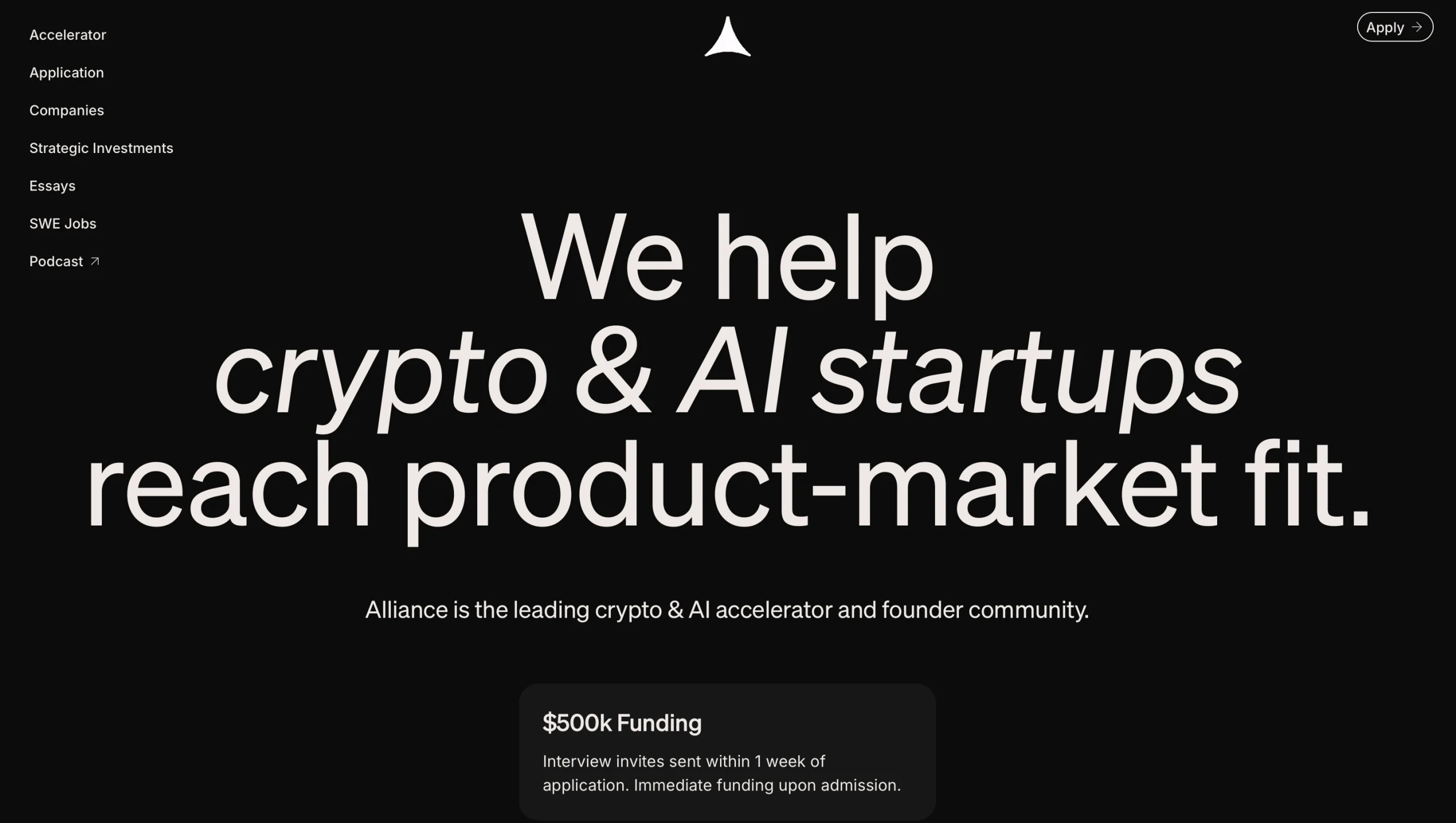
Alliance DAO has established itself as one of the most respected crypto native accelerators operating today. Founded by and for people who have actually built in crypto, it brings a different energy than programs run by traditional VC firms. The community is intensely focused on DeFi, consumer crypto, and the infrastructure layer, and the mentorship network reflects that focus.
The standard program invests $250K in exchange for equity, and the cohort model creates a tight knit founder community that extends well beyond the formal program period. Alliance alumni are known for staying actively connected, sharing deal flow, and referring talent and investors within the network long after graduation.
What distinguishes Alliance from many competitors is the quality of its operator mentors. The program draws on founders who have built protocols, launched tokens, navigated regulatory challenges, and scaled crypto native products to significant user bases. That practitioner knowledge base is significantly more useful to crypto founders than generic startup mentorship from advisors without on chain experience.
Best for: Crypto native founders building DeFi, consumer crypto, or infrastructure products who want mentorship from people who have done it before
Focus: DeFi, consumer crypto, infrastructure
Funding: $250K standard investment for equity
Watch out for: The program is highly selective and moves fast. Founders need to be ready to execute, not still validating their core hypothesis
Draper University Crypto Track

Draper University, founded by legendary venture capitalist Tim Draper, has been an early and consistent supporter of crypto and blockchain startups. The crypto track within their broader accelerator program provides early stage founders, including first time founders, with access to the Draper network, structured entrepreneurship training, and connections to the Silicon Valley investor community.
The program is deliberately designed to be accessible to founders who may not yet have the credentials or network to walk into a Binance Labs or Alliance DAO application. The structured curriculum covers business fundamentals alongside crypto-specific content, making it particularly valuable for technical founders who need to develop their commercial skills alongside their product vision.
Tim Draper’s personal conviction in crypto is genuine and longstanding, and the network of Draper associates and alumni spans both traditional venture and crypto native investing. For first time founders who need both structured support and credible association, Draper University represents an accessible and respected entry point into the incubator ecosystem.
Best for: First time founders, technical founders who need commercial support, and teams that benefit from Silicon Valley network access
Focus: Broad tech with a dedicated crypto track
Funding: Varies by program and follow on investment
Watch out for: The program is broader and less crypto specialized than Alliance DAO or Outlier Ventures. Founders with deep crypto experience may find more value in programs built specifically for Web3
How to Choose the Right Crypto Incubator for Your Project
The worst application mistake founders make is applying to every program at once without tailoring their pitch to each one. Incubators are not interchangeable, and a generic application reads like one.
Match the incubator to your chain. If you are building on Solana, the Solana Foundation Grants Program and Alliance DAO are the natural starting points. Building on Base or Ethereum? Coinbase Ventures, Consensys Mesh, and the Base Ecosystem Fund offer the most relevant network. Polygon builders have a clear path through the Polygon Ecosystem Fund.
Match the incubator to your stage. Draper University and Outlier Ventures are designed for early-stage teams that need structure and support from the ground up. Binance Labs and Alliance DAO expect more developed projects with clear product differentiation and some form of traction. Applying to a late-stage program with a pre-product idea wastes everyone’s time.
Match the incubator to your funding needs. If you need non-dilutive capital and want to retain full ownership, the Solana Foundation Grants Program is among the best available options. If you are comfortable with equity or token allocation in exchange for a more hands-on accelerator experience, Outlier Ventures and Alliance DAO offer strong value for that trade-off.
Research the alumni before applying. Look up the graduate projects from each program. Check whether they are live, whether they raised follow-on funding, and whether the founders are still active in the ecosystem. Alumni outcomes are the most honest signal of what a program actually delivers.
Apply when your project is ready, not when you are desperate. Incubators can tell the difference. A strong application shows a team that understands its market, has a differentiated product thesis, and is applying because the program adds specific value, not because the team ran out of runway and needs a check.
Final Thoughts
The best crypto incubators in 2026 are not charity programs. They are high conviction bets on founders and products that have a real shot at building something meaningful. The programs on this list have earned their reputations by consistently producing projects that ship, scale, and survive beyond the first bull run.
For founders who qualify, the value extends well beyond the initial check. The networks, mentorship, and credibility that come from the right incubator association compound over the life of a project in ways that are genuinely difficult to replicate through cold outreach and solo fundraising.
Build something real. Apply to the program that actually fits. Show up ready to execute.
Work With Cryptic
Rising from an incubator is the beginning, not the end. Once you have funding, you need a marketing strategy that puts your project in front of the right audiences and builds real community momentum. Cryptic is a Web3 native marketing agency helping token projects, DeFi protocols, and blockchain startups grow through content, SEO, and community strategy.
Visit crypticweb3.com to see how we work.
What is a crypto incubator?
A crypto incubator is a program that supports early-stage blockchain and Web3 startups with funding, mentorship, technical resources, and ecosystem connections. Unlike traditional investors who write checks and step back, incubators work closely with founders over a defined period to help them build, launch, and scale their projects.
What is the difference between a crypto incubator and a crypto accelerator?
The terms are often used interchangeably, but there is a meaningful distinction. Incubators typically work with very early-stage projects over a longer, less structured period. Accelerators run fixed duration cohort programs, usually three to six months, with a defined curriculum and a demo day at the end. Many programs on this list blend both models.
How do crypto incubators make money?
Most crypto incubators take equity in the startups they support, a token allocation at launch, or both. Some ecosystem-specific programs like the Solana Foundation Grants offer non-dilutive funding with no ownership stake in exchange for building within their ecosystem.
How do I apply to a crypto incubator?
Each program has its own application process, but the common requirements include a clear description of your product or protocol, information about the founding team and their backgrounds, a go to market strategy, and some evidence of early traction or technical progress. Research each program’s specific criteria before applying and tailor your application accordingly.
Which crypto incubator is best for DeFi projects?
Alliance DAO and Binance Labs are the strongest options for DeFi focused projects. Both have deep DeFi portfolios, operator mentors with direct DeFi building experience, and networks that include the exchanges, market makers, and institutional investors most relevant to DeFi launches.
Can a non-technical founder get into a crypto incubator?
Yes, but it is harder. Most top programs place significant weight on technical credibility, particularly for infrastructure or protocol projects. Non-technical founders have stronger chances with consumer-facing products where commercial and community-building skills are more central. Bringing a strong technical co-founder significantly improves any application.
Are crypto incubators worth it?
For the right project at the right stage, yes. The combination of capital, credibility, mentorship, and network access that a top incubator provides is genuinely difficult to replicate independently. The key is applying to programs that are actually aligned with your chain, vertical, and stage rather than treating every incubator as interchangeable.
| Incubator | Focus | Funding Range | Equity or Token | Best For |
|---|---|---|---|---|
| Binance Labs | Multi vertical | Varies, up to millions | Token allocation | High growth Web3 startups |
| Coinbase Ventures / Base Fund | Base ecosystem, broad Web3 | Varies | Equity + token | Consumer crypto, Base builders |
| Outlier Ventures | Web3 accelerator | Up to $500K | Equity | Early stage founders, any vertical |
| Consensys Mesh | Ethereum ecosystem | Varies | Equity | Ethereum native projects |
| Solana Foundation Grants | Solana ecosystem | Up to $250K | Non dilutive grant | Solana native developers |
| Alliance DAO | DeFi, consumer crypto | $250K standard | Equity | Crypto native founders |
| Draper University | Broad tech + crypto | Varies | Equity | First time founders |