Crypto marketing bears little resemblance to traditional advertising. No polished TV spots, no billboard campaigns, no brand agency crafting a voice document. Instead, it runs on something that looks trivial from the outside: the meme. Anyone who takes crypto meme marketing seriously quickly understands that the meme is not decoration, it is infrastructure.
What is crypto meme marketing?
Crypto meme marketing is the use of culturally resonant, community-driven content, images, phrases, characters, and language, to grow awareness, build identity, and drive adoption for crypto projects. Unlike traditional campaigns that push a message outward, meme marketing pulls people in. The audience becomes the distribution channel.
While traditional crypto marketing relies on whitepapers, roadmaps, and technical protocols, projects that win culturally thrive on humor, shared identity, and a loyal community. A well-executed meme campaign can do more for a project overnight than months of technical documentation. This is the core tension in crypto marketing: the projects with the best technology are not always the ones that win. The projects with the best memes often are.
How memes function as compressed communication
Crypto is cognitively demanding. Tokenomics, layer-2 architecture, decentralization, liquidity pools, these are not concepts the average person grasps in five minutes. Meme marketing solves that through compression: complex ideas are translated into immediately recognizable signals that spread without friction.
“WAGMI”, “We’re All Gonna Make It”, is a perfect example of how much work a single piece of meme language can do. When a thousand people in your Discord are posting WAGMI during a market dip, it functions as a psychological survival mechanism. It delays panic selling, reinforces conviction, and keeps communities intact through volatility. Its counterpart, “NGMI” (Not Gonna Make It), creates in-group cohesion while establishing a soft boundary between long-term believers and short-term speculators.
During bull markets, WAGMI dominates social feeds, reinforcing optimism and encouraging participation. During bear markets, NGMI rises, a real-time barometer of community sentiment that no paid campaign can replicate. The meme vocabulary of a crypto community is, effectively, a live sentiment dashboard.
Dogecoin: proof of concept for crypto meme marketing
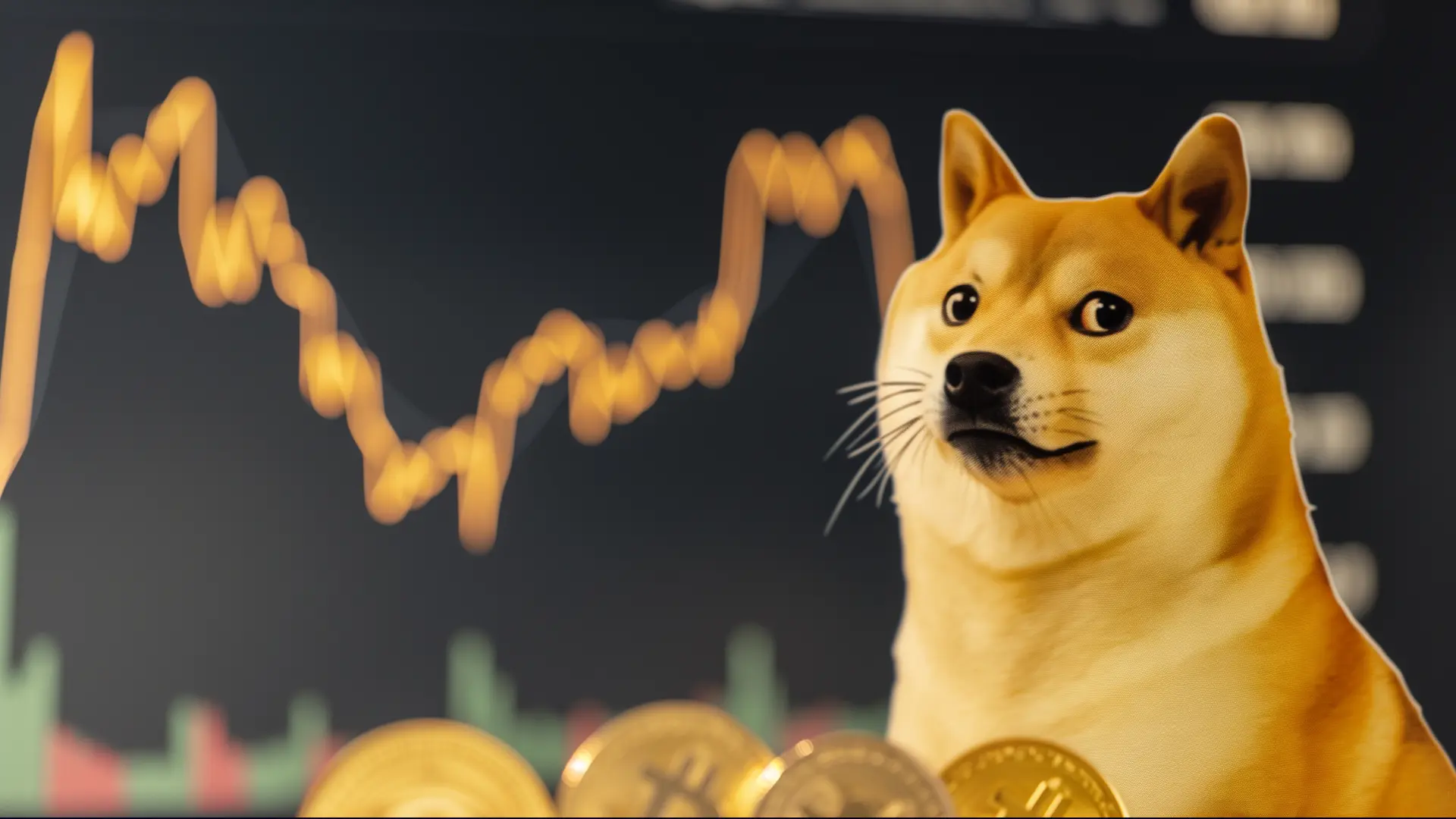
The canonical example remains Dogecoin. It launched in 2013 as an explicit joke, a Shiba Inu dog lifted from a viral meme, built on a forked blockchain. No roadmap, no VC backing, no meaningful technical differentiation. But the cultural momentum it built preceded every fundamental metric that followed. Millions of users entered crypto for the first time through a coin they recognized from Twitter humor. The meme was the distribution layer.
Dogecoin did not succeed despite being a joke. It succeeded because of it, and that principle has been copied and scaled by every serious meme marketing strategy since. Social media turned internet humor into real market cap, and created a loyal community around shared cultural identity rather than shared financial thesis.
Pudgy Penguins: the blueprint for meme-driven brand building

The most fully realized contemporary example of crypto meme marketing is pudgy penguins. Under entrepreneur Luca Netz, who acquired the brand for 750 ETH in April 2022, the goal was to turn a niche NFT collection into a global IP powerhouse. Netz’s central thesis: memes evolve into social currencies, assets that derive value from sustained cultural participation rather than speculation alone.
The approach inverted the standard NFT playbook entirely. Rather than building an exclusive community first and chasing mainstream adoption second, Pudgy Penguins prioritized physical retail and viral content from day one. The goal was to build a global IP that happens to have an NFT, not an NFT collection trying to become a brand.
The results are concrete. Plush toys and physical merchandise landed on shelves at Walmart and Target. Viral short-form content campaigns across TikTok and Instagram generated billions of impressions. Multiple major crypto projects changed their X profile pictures to the penguin character, a collective, organic signal of cultural legitimacy that no marketing budget can manufacture.
VanEck used the penguin in promotional material for their Ethereum ETF and rang the Nasdaq opening bell alongside the Pudgy Penguins team, the first time native crypto IP appeared on the stage of global capital markets. The meme had become a financial instrument.
The GIF strategy deserves particular attention: by seeding penguin GIFs across platforms like Tenor, the brand embedded itself organically into everyday conversations. Crypto spreading through daily communication with zero paid placement. That is the compounding power of meme marketing done right.
Ponke: community-first meme marketing on Solana
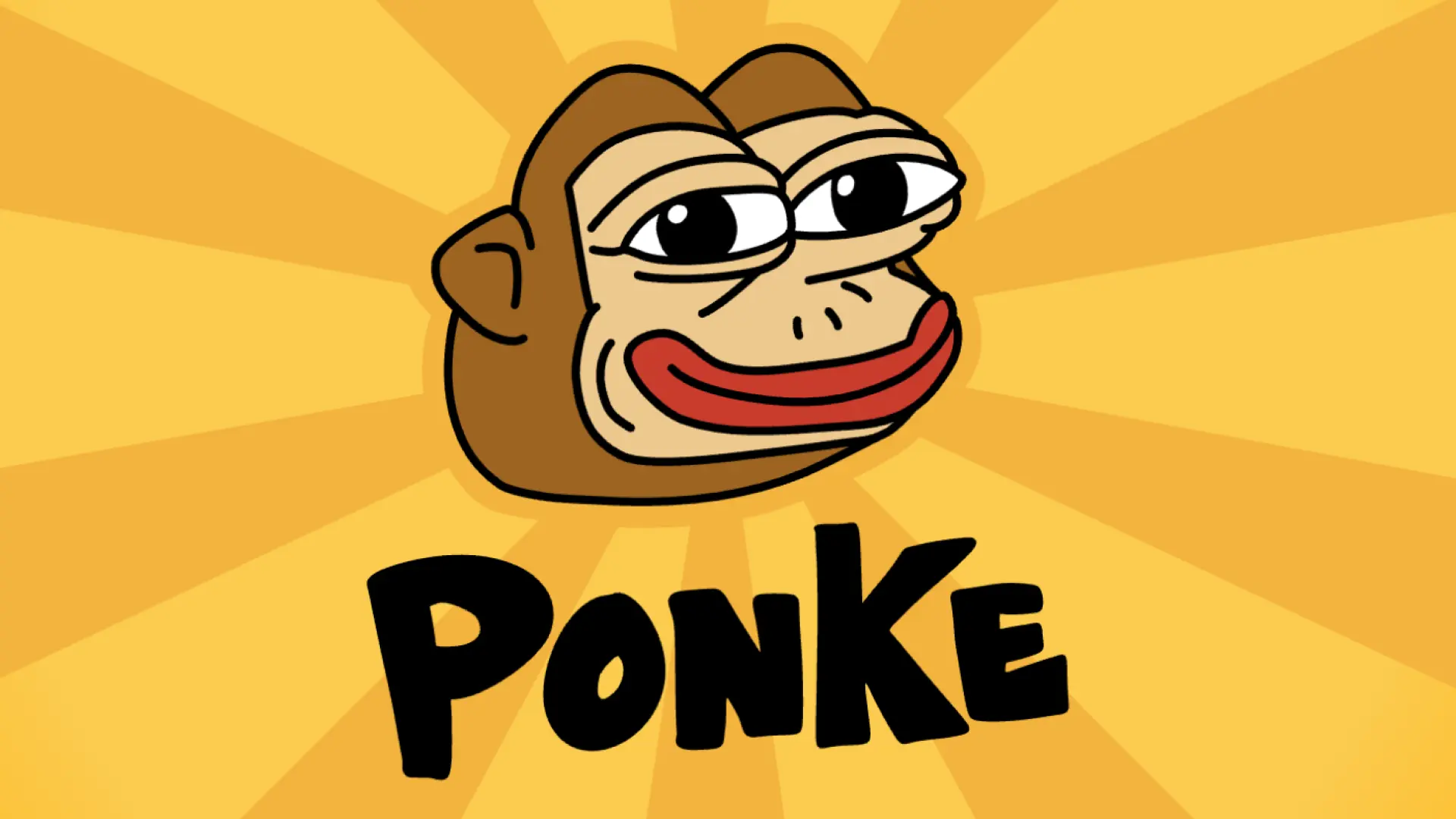
Where Pudgy Penguins entered from the NFT world, Ponke is a purely Solana-native meme coin that owes its growth almost entirely to community-driven content. One of their videos collected 47 million views, one of the most-watched pieces of content in the entire crypto space. That did not happen through ad spend. It happened through a deliberate content strategy built around a consistent character and daily output.
The team’s philosophy is explicit about where the real work happens: “We think about how we grow, the impact of the token and the brand. And then the community really does the rest.” The craft behind the brand is equally deliberate, the team never uses artificial intelligence. Everything is hand-drawn. That commitment to handmade, character-driven content gives Ponke a visual consistency and personality that generic AI-generated output cannot replicate.
Ponke reached a market cap of over $200 million, driven by its enthusiastic community known as the #PONKEARMY, and climbed into the top 10 Solana-based meme coins by market cap, despite launching without functional utility. The growth was purely cultural. Community, content, and character did what a whitepaper could not.
Memes as identity markers: the soft barrier to entry
An underappreciated mechanism in crypto meme marketing is exclusion as an onboarding tool. Understanding a meme requires contextual knowledge. Knowing Pepe, knowing “this is fine,” knowing what “ser,” “wen,” or “gm” means signals that you are already partially inside the community. Someone who doesn’t get the reference isn’t pushed away, they are incentivized to learn, which is one of the most efficient onboarding loops in any industry.
The meme becomes a statement of belief. Users who deploy WAGMI fluently signal alignment with crypto’s foundational principles: decentralization, financial sovereignty, long-term thinking. That signal carries social weight that no banner ad ever will.
The risk: memes are amplifiers, not foundations
The most dangerous misconception in crypto meme marketing is that memes create value. They don’t, they amplify what already exists. A strong meme strategy applied to a weak project accelerates both the rise and the collapse. Attention is abundant. Retention is not.
The Ponke marketing lead put it plainly: “A lot of people are motivated by price and if the price isn’t actively going up, they’re not actively buying. We can’t change that. But what we hope to do is build culture that people want to be a part of.”
That distinction, culture versus hype, determines the longevity of any meme marketing strategy. PENGU surged strongly after launch but dropped more than 86% from its peak, a clear illustration of how even a brand with genuine retail presence and deliberate community building remains exposed to market sentiment once a narrative cools. Meme marketing can fill a stadium overnight. Keeping that stadium full is a different challenge entirely.
What separates sustainable crypto meme marketing from short-term hype
The difference between projects that last and projects that disappear comes down to one thing: whether the meme connects to something real. Pudgy Penguins ties viral content to physical merchandise, gaming, and IP licensing. Ponke ties its character to hand-drawn animation, a native DEX, and partnerships that lower the entry barrier for new users on Solana.
The most successful meme marketing campaigns balance humor with purpose, engage communities through authenticity, and sustain momentum long after launch day. Short-term hype relies purely on virality without follow-through. Once attention fades, the project fades with it.
Sustainable crypto meme marketing follows a consistent community loop: content → recognition → identity → participation → retention. The meme is the entry point, not the endpoint. The projects that understand this are the ones still being discussed a full market cycle later.
From Meme Culture to Scalable Growth
If you recognize the strategic importance of meme marketing, the next step is execution at the right level.
At Cryptic, we work with crypto projects to translate cultural relevance into structured, scalable growth. Our approach goes beyond short-term visibility, focusing on narrative development, community dynamics, and long-term brand positioning within the market.
If you’re building something that deserves attention, book a strategy call and let’s map out how to get it.
Frequently Asked Questions
How do memes shape investor psychology in crypto markets?
Memes influence collective belief systems at scale. During bear markets and sudden price crashes, phrases like WAGMI act as emotional support infrastructure, helping participants maintain conviction when portfolio values drop sharply. Over time, this creates cyclical emotional patterns that directly influence buying and selling behavior across entire market cycles, making meme culture one of the most underestimated forces in crypto price action.
Why do meme-driven projects sometimes outperform fundamentally strong projects?
Because attention is a leading indicator in crypto. Markets are narrative-driven, and meme marketing is the fastest mechanism for spreading narratives. A strong product without cultural relevance stays invisible. As the Ponke team noted, a cultural phenomenon can become a meme that much later becomes a serious crypto asset, Dogecoin existed as a meme for years before it took off as a major cryptocurrency.
What makes a crypto meme marketing strategy sustainable long-term?
Sustainable meme strategies are tied to deeper narratives, consistent product development, and community engagement loops that give holders a reason to stay beyond price action. The clearest signal of sustainability is whether a community continues to produce and share content organically when the price is flat, because that means identity, not speculation, is doing the work.