
Quick answer
For most participants in 2026, the safest yield comes from Aave lending and Curve stable pools, both long-running and lower-risk. Convex boosts Curve returns, while Yearn and Beefy automate compounding across chains. Pendle suits fixed-yield and rate speculation, Aerodrome leads on Base, Kamino on Solana, and Ethena offers delta-neutral funding rate yield. The strongest approach combines two or three protocols matched to your risk tolerance and chain rather than chasing the single highest APY. All DeFi carries risk of capital loss, and this is not financial advice. Check live rates at DefiLlama and Aave.
Yield farming is not dead. It just grew up.
The era of four-digit APYs driven by unsustainable token emissions is mostly behind us. What replaced it is a more mature, more differentiated ecosystem of protocols that generate real yield from real activity, trading fees, lending interest, perpetuals funding rates, and liquidity provisioning across both EVM and Solana ecosystems.
For participants who understand what they are doing, 2026 offers some of the most compelling risk-adjusted yield opportunities DeFi has produced. For participants who chase numbers without understanding the mechanics, the risks are as real as they have always been.
This guide covers the top crypto yield farming platforms in 2026, how each one generates yield, who it is best for, and what risks to understand before deploying capital. It is educational and informational, not financial advice. Every yield figure below is illustrative and varies with market conditions, and all DeFi carries the risk of partial or total loss of capital.
Why Yield Farming Still Matters in 2026
The narrative around yield farming has evolved significantly. Early DeFi summers produced enormous numbers that collapsed almost as fast as they appeared. The protocols that survived that era and continued to attract serious capital are the ones that generate yield from genuine economic activity rather than inflationary token printing.
In 2026, the most credible yield farming opportunities come from a few durable sources. Lending interest paid by borrowers creates yield for depositors. Trading fees paid by swappers flow to liquidity providers. Funding rates from perpetuals markets create yield for delta-neutral strategies. And real-world yield from tokenized assets adds an entirely new dimension to what on-chain income can look like.
The protocols on this list represent established options in each category. The yields vary by market conditions, and the mechanisms behind them are verifiable on-chain. None of this is a guarantee of return, and past yields do not predict future ones.
What to Look for in a Yield Farming Platform
Before depositing capital anywhere, it is worth evaluating every platform against these criteria.
Yield Source Transparency: The best platforms make it clear exactly where the yield comes from. Lending interest, trading fees, and funding rates are more sustainable than token emissions without underlying economic activity. Always ask: if the native token stopped being emitted tomorrow, would yield still exist?
Smart Contract Security: Audit history, bug bounty programs, and time-in-market without exploits are the strongest signals of contract security. No protocol is risk-free, but platforms with multiple independent audits and years of clean operation have meaningfully lower smart contract risk than newer or less battle-tested alternatives.
Impermanent Loss Profile: Liquidity pools that pair volatile assets carry impermanent loss risk. Stable-to-stable pools and single-sided staking positions carry far less. Understanding your IL exposure before entering a position is essential.
Chain and Gas Cost Context: High-yield positions on Ethereum mainnet can be eaten alive by gas costs if the position size is too small. Solana and L2-based farms offer comparable yields with dramatically lower transaction costs, which matters for frequent compounding strategies.
Liquidity and Exit Conditions: Always check whether there are lockups, unstaking periods, or liquidity constraints on your position. Some protocols require advance notice to exit. Others have smart contract pauses that can prevent withdrawal during adverse conditions.
Top Crypto Yield Farming Platforms in 2026 At a Glance
| Platform | Chain | Yield Type | Best For | Risk Level |
|---|---|---|---|---|
| Aave | Multi-chain | Lending interest | Conservative stablecoin yield | Low to medium |
| Curve Finance | Multi-chain | Trading fees + CRV | Stable pair liquidity provision | Low to medium |
| Convex Finance | Ethereum, Arbitrum | Boosted CRV + CVX | Maximizing Curve LP returns | Medium |
| Yearn Finance | Ethereum, multi-chain | Auto-compounded vault yield | Passive yield optimization | Medium |
| Pendle Finance | Ethereum, Arbitrum, Base | Fixed and variable yield trading | Yield speculation, fixed income | Medium to high |
| Beefy Finance | Multi-chain | Auto-compounded LP yield | Cross-chain yield farming | Medium |
| Aerodrome Finance | Base | Trading fees + AERO emissions | Base ecosystem liquidity provision | Medium |
| Kamino Finance | Solana | Lending, LP, and leverage yield | Solana DeFi participants | Medium to high |
| Ethena | Ethereum | Delta-neutral funding rate yield | Stablecoin yield seekers | Medium |
Top Crypto Yield Farming Platforms (Full Breakdown)
Aave
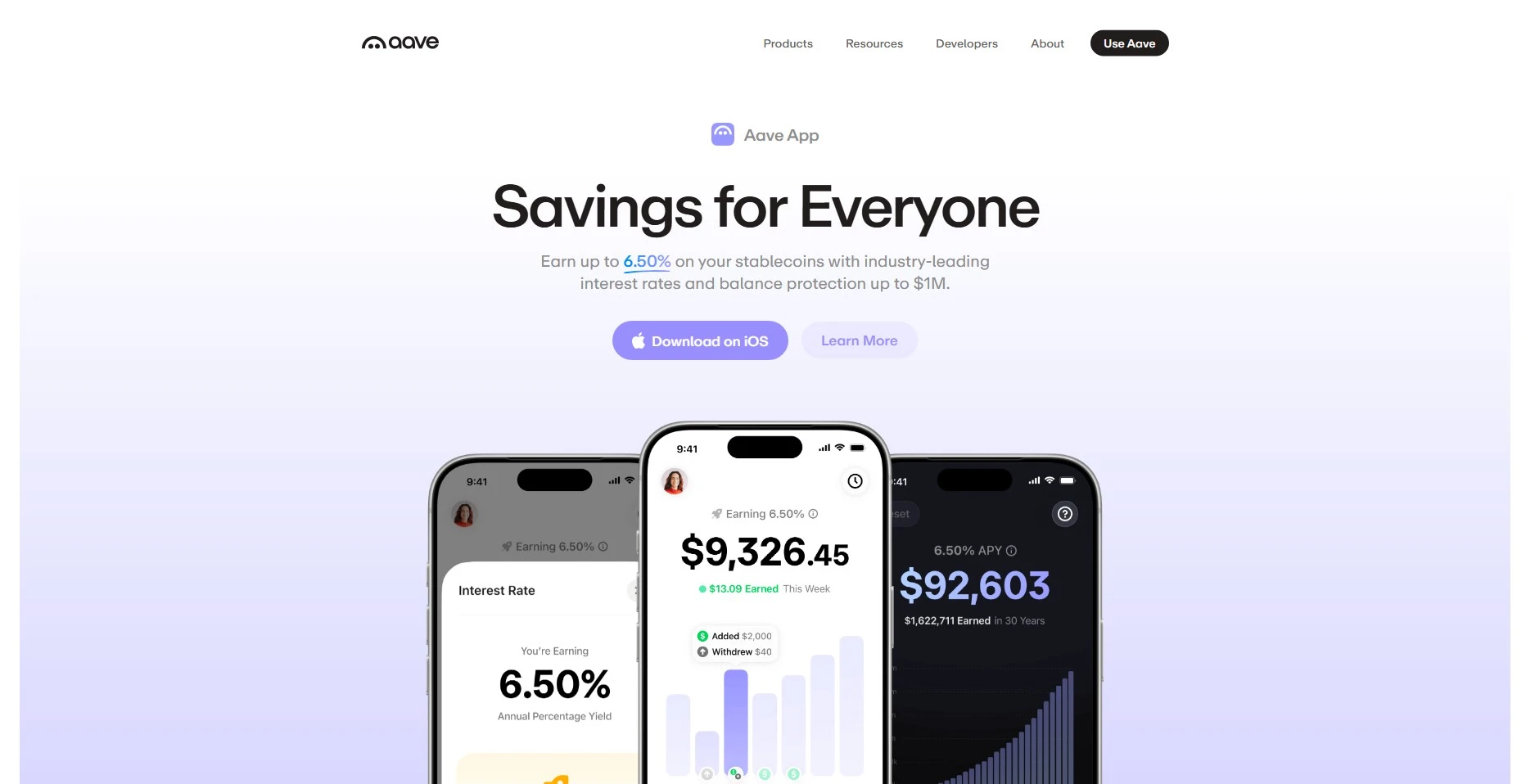
Aave is the most battle-tested lending protocol in DeFi and one of the more conservative places to put capital to work in 2026. The mechanism is straightforward: depositors supply assets to lending pools, borrowers pay interest to access them, and that interest flows to depositors as yield. The protocol has operated since 2017 without a major exploit, which in DeFi is a track record that commands genuine respect.
Aave operates across Ethereum, Arbitrum, Optimism, Base, Polygon, Avalanche, and Gnosis Chain, giving depositors flexibility on where they park capital. Stablecoin yields vary by market conditions, often ranging from roughly 3% to 8% on USDC and USDT in normal market environments, with spikes during high-demand periods. ETH and wBTC yields are generally lower. These figures move constantly and should be checked live before depositing.
Aave V4 launched on Ethereum mainnet in March 2026, introducing a hub-and-spoke architecture that centralizes liquidity while letting individual markets run their own collateral and risk rules. At launch it is Ethereum-only, with multi-chain expansion under consideration pending Aave DAO governance. The long-running V3 deployments remain live across the other supported chains.
Best for: Conservative participants who want steadier, lower-risk stablecoin or blue-chip crypto yield.
Chain: Ethereum, Arbitrum, Optimism, Base, Polygon, and more.
Risk level: Low to medium.
Watch out for: Yields can compress significantly during low-demand periods, and borrow rates can spike and impact net returns for recursive strategies.
Curve Finance
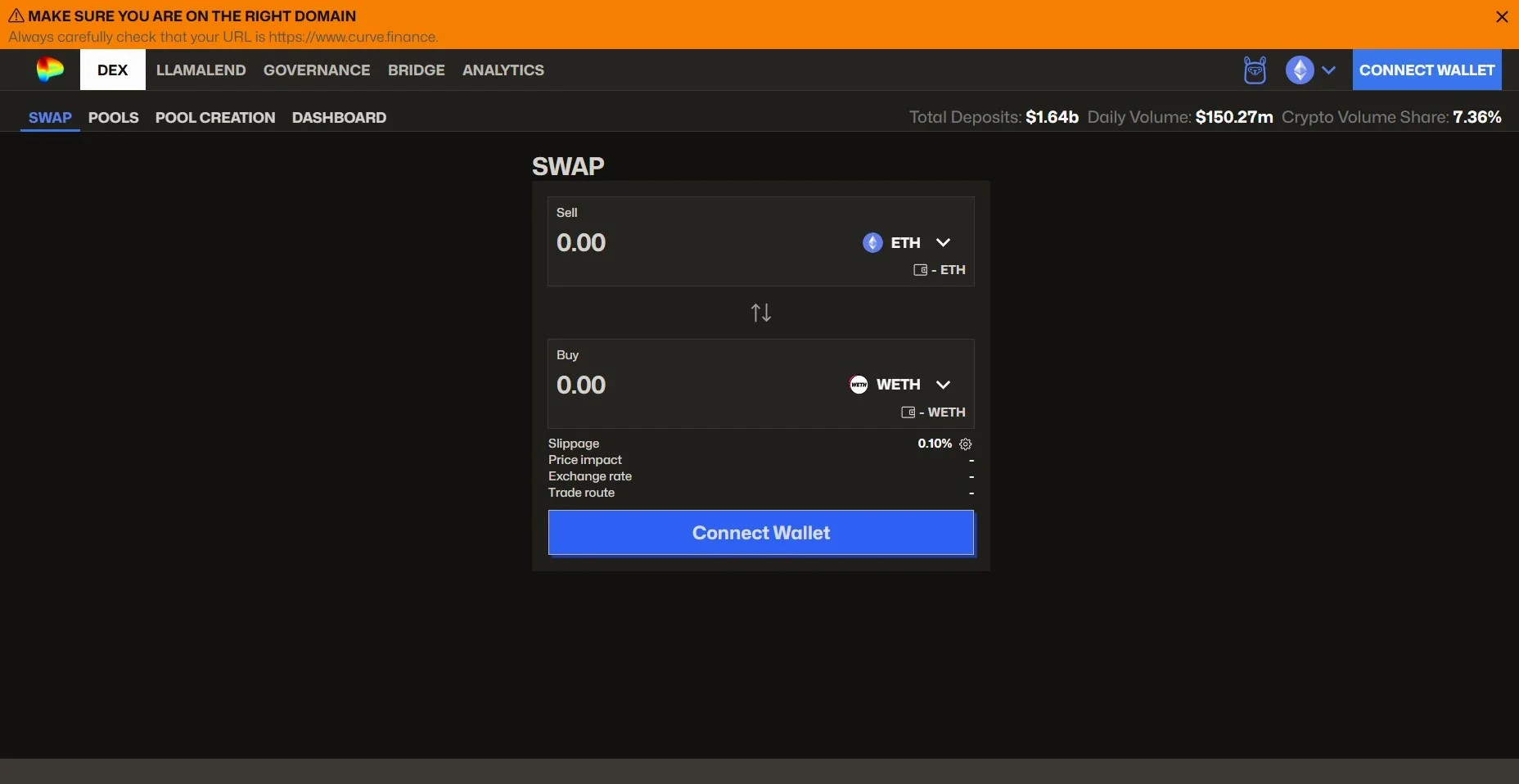
Curve Finance is a foundational infrastructure layer for stablecoin yield in DeFi, and its position has remained remarkably durable through multiple market cycles. Liquidity providers deposit assets into Curve pools and earn a share of the trading fees generated by every swap. On stable pairs the fee is low per trade, but on high-volume pools the aggregate daily fees can produce meaningful annual yields even before CRV token incentives are factored in.
The veCRV governance model adds a yield layer for long-term CRV lockers, who earn a share of protocol fees across pools in addition to boosted rewards on their own liquidity positions. For participants willing to engage with the governance layer, Curve offers compounding yield sources that passive depositors miss.
The crvUSD stablecoin, now a mature product, adds another dimension to the protocol yield ecosystem, with lending markets built directly into the Curve infrastructure.
Best for: Stablecoin liquidity providers who want lower-risk yield from deep, high-volume pools.
Chain: Ethereum, Arbitrum, Optimism, Polygon, Avalanche, Base, and more.
Risk level: Low to medium.
Watch out for: CRV token rewards add complexity, and stable pair yields without incentives can be modest during low-volume periods.
Convex Finance
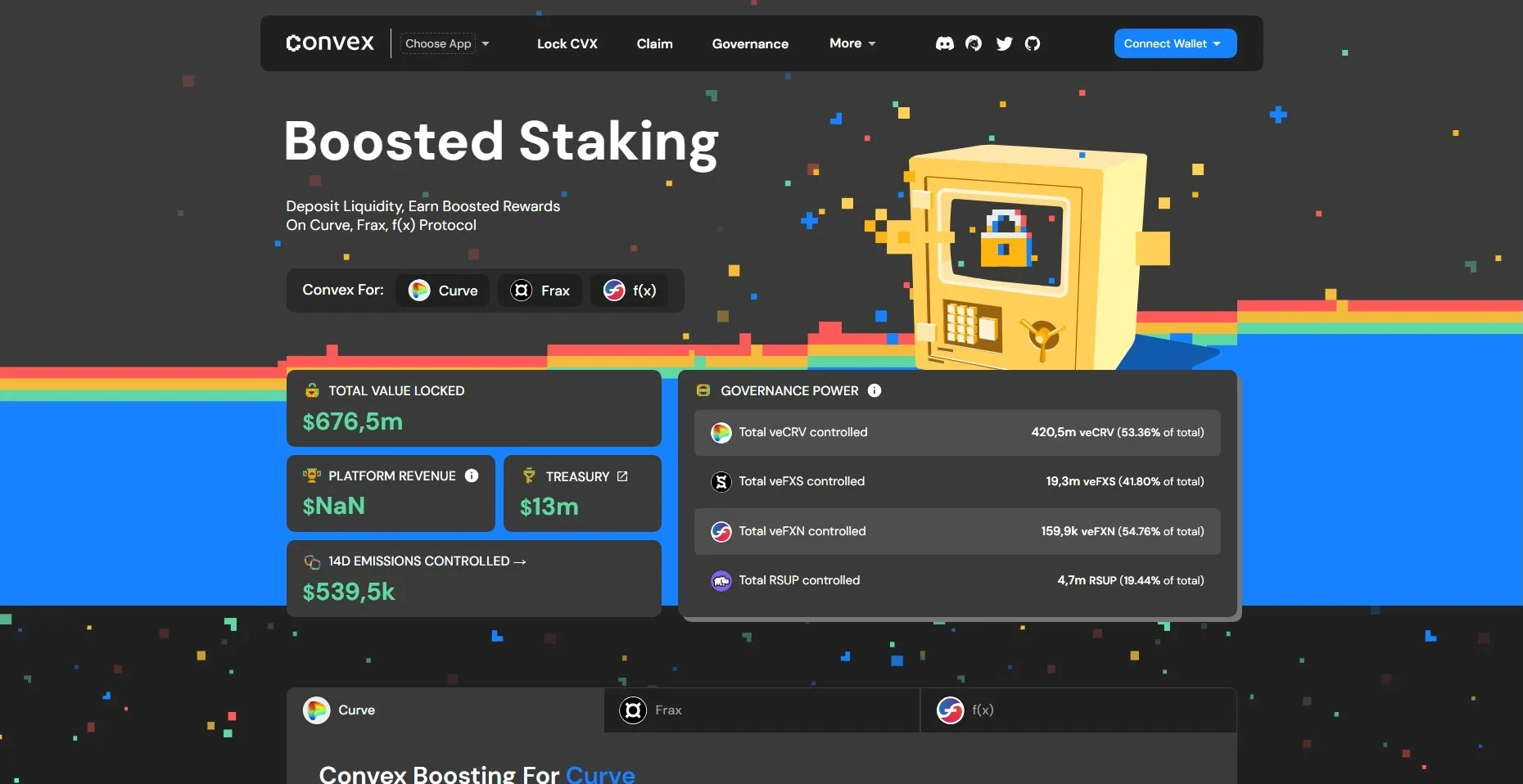
Convex Finance exists to solve a specific problem: maximizing Curve LP returns without requiring users to lock CRV directly. By pooling veCRV across its user base, Convex provides boosted CRV rewards to depositors regardless of how much CRV they personally hold. Depositors stake their Curve LP tokens on Convex and receive both the boosted CRV emissions and additional CVX token rewards on top of the base trading fees.
The result is that Convex LPs have historically earned more than equivalent Curve LPs who are not actively managing their veCRV position. For many participants, depositing on Convex rather than directly on Curve is the more capital-efficient choice when the underlying pool is the same.
Convex has expanded beyond Curve to support additional protocols including Frax, giving it a broader yield optimization mandate.
Best for: Curve liquidity providers who want maximized returns without actively managing veCRV positions.
Chain: Ethereum, Arbitrum.
Risk level: Medium.
Watch out for: Convex adds a layer of smart contract complexity on top of Curve, and boosted rewards are subject to CVX token dynamics.
Yearn Finance
Yearn Finance pioneered the concept of automated yield optimization and remains one of the more sophisticated vault systems in DeFi. Users deposit assets into Yearn vaults, and automated strategies allocate that capital across the higher-yielding opportunities available, rebalancing as market conditions change.
The vault model abstracts away much of the complexity of active DeFi participation. Instead of manually rotating between Aave, Curve, Convex, and other protocols, the Yearn strategists and automated contracts do that work on behalf of depositors. The strategies are publicly audited and governed by YFI token holders, providing a layer of community oversight over how capital is deployed.
The Yearn v3 vault architecture has improved capital efficiency and modularity, and the protocol has expanded its coverage of assets and chains since its early Ethereum-only days, including low-fee L2s like Base.
Best for: Passive yield farmers who want automated, diversified exposure without managing individual protocol positions.
Chain: Ethereum, multi-chain.
Risk level: Medium.
Watch out for: Multi-protocol strategy exposure means that an exploit in any underlying protocol could impact Yearn vault depositors.
Pendle Finance
Pendle Finance is one of the more innovative yield products on this list and one of the more interesting financial primitives DeFi has produced. It allows users to split yield-bearing assets into two separate tokens: a principal token that redeems for the underlying at maturity, and a yield token that captures all the yield generated between now and expiry.
This separation creates two distinct strategies. Fixed yield seekers can buy principal tokens at a discount to lock in a defined return regardless of what happens to variable rates. Yield speculators can buy yield tokens with leveraged exposure to rate movements, betting that funding rates or staking yields will stay elevated or increase. Both carry real risk of loss if rates move against the position.
Pendle has become a core component of the sUSDe and liquid staking yield ecosystem, with pools supporting Ethena, liquid staking tokens, and other yield-bearing assets across Ethereum, Arbitrum, BNB Chain, and Base. It is the largest sUSDe trading venue in DeFi.
Best for: Sophisticated yield farmers who want to fix yields, speculate on rate movements, or extract additional returns from existing yield-bearing positions.
Chain: Ethereum, Arbitrum, BNB Chain, Base.
Risk level: Medium to high.
Watch out for: Yield tokens can lose significant value if implied rates compress, and the mechanics require genuine understanding before deploying capital.
Beefy Finance
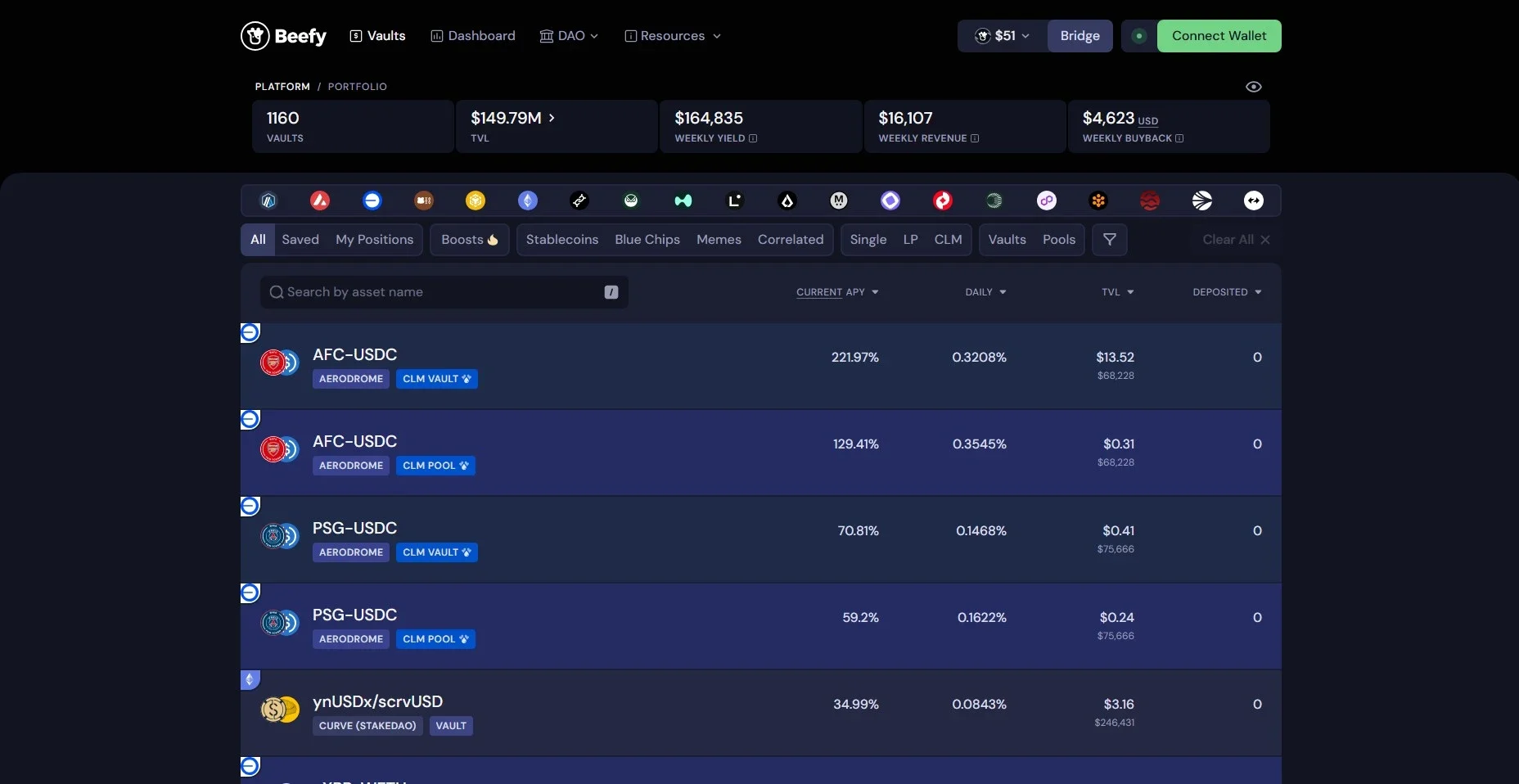
Beefy Finance is a leading multi-chain yield optimizer, operating across more than twenty blockchain networks and automatically compounding LP positions to improve returns. The platform aggregates yield farming opportunities from DEXs and lending protocols across major chains, presents them in a unified interface, and handles the compounding mechanics automatically.
The core value proposition is simple: manual compounding of LP rewards is gas-intensive and time-consuming. Beefy automates the process, harvesting rewards and reinvesting them continuously, which can meaningfully improve effective APY on positions held for extended periods.
The breadth of the Beefy chain coverage is its clearest differentiator. For participants who are active across multiple ecosystems and want a single interface to manage yield farming positions across all of them, Beefy is one of the most practical options available.
Best for: Cross-chain yield farmers who want automated compounding across multiple ecosystems in a unified interface.
Chain: Ethereum, BNB Chain, Polygon, Avalanche, Arbitrum, Optimism, Base, and more.
Risk level: Medium.
Watch out for: Vaults are built on top of underlying protocols, so smart contract risk compounds with each additional layer.
Aerodrome Finance

Aerodrome Finance is the dominant liquidity protocol on Base and one of the more capital-efficient yield farming venues in the DeFi ecosystem. Liquidity providers earn trading fees from the pools they supply, while the veAERO governance model allows token lockers to direct emissions toward their preferred pools and collect additional fee revenue.
The incentive flywheel on Aerodrome is effective. Protocols that want liquidity on Base incentivize veAERO holders to vote for their pools, which concentrates emissions toward high-volume pairs and creates yield for providers in those pools. The result is consistently competitive APYs on Base-native pairs without relying on inflationary token printing alone.
For participants already active on Base, Aerodrome is a natural first destination for yield farming capital. The liquidity depth on major pairs is strong for an L2-native protocol.
Best for: Base ecosystem participants who want competitive yield from the central liquidity hub of the chain.
Chain: Base.
Risk level: Medium.
Watch out for: Active veAERO management is required to maximize returns, and passive depositors miss the governance incentive layer.
Kamino Finance
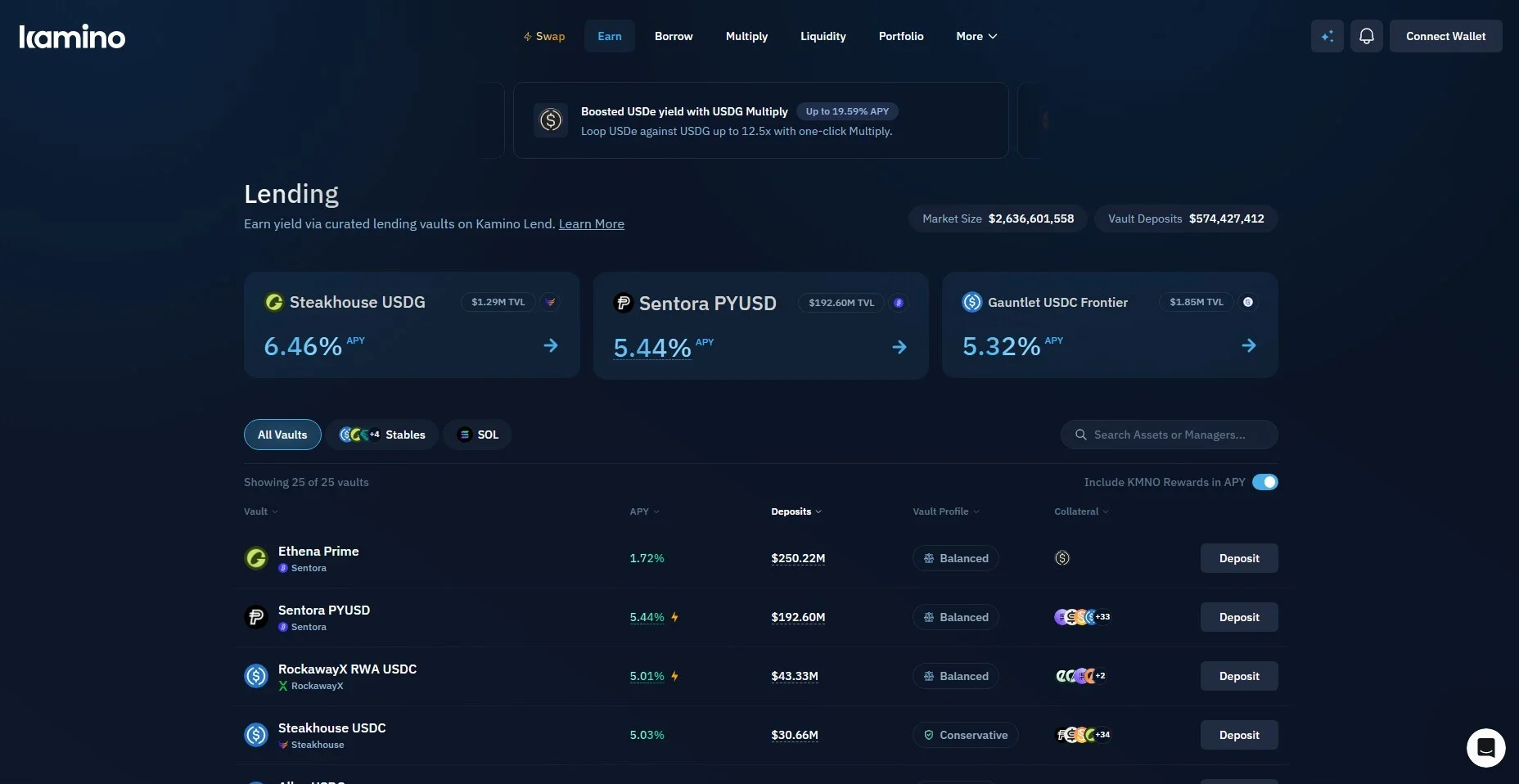
Kamino Finance is one of the most comprehensive DeFi platforms on Solana, combining lending markets, automated liquidity vaults, and leverage products into a single, unified interface. For yield farmers operating on Solana, Kamino is a central venue.
The lending market supports borrowing and supplying across major Solana assets including SOL, USDC, JitoSOL, and JLP, with interest rates determined by utilization. The automated vaults handle concentrated liquidity management on Solana DEXs, auto-compounding fees and rebalancing positions to keep them in range. The leverage products allow more aggressive participants to amplify exposure within defined risk parameters.
The combination of all three product lines in one place makes Kamino useful for Solana-native participants who want to optimize capital across lending, liquidity, and leveraged strategies without switching between multiple protocols.
Best for: Solana DeFi participants who want a comprehensive yield farming suite covering lending, liquidity, and leverage in one platform.
Chain: Solana.
Risk level: Medium to high.
Watch out for: Concentrated liquidity positions require active monitoring, and leverage amplifies both gains and losses.
Ethena
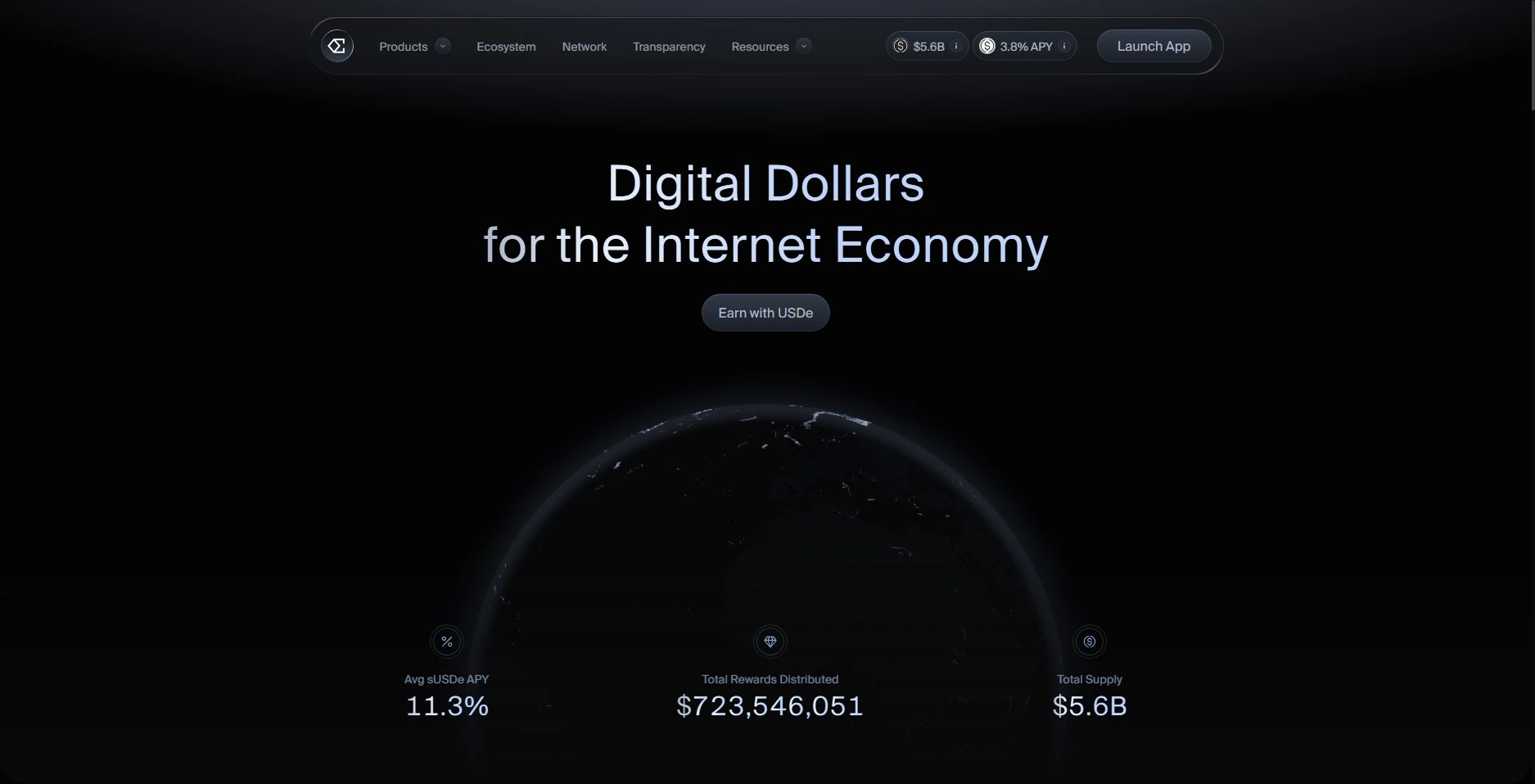
Ethena is the most structurally novel yield source on this list. Rather than earning yield from lending markets or trading fees, Ethena generates returns through a delta-neutral strategy that captures the funding rate paid by perpetuals traders to their counterparties. When you stake USDe to receive sUSDe, you are earning a share of the funding rate that perpetuals longs pay to the Ethena short positions, combined with staking rewards from the ETH collateral underlying the protocol.
The resulting yield is genuinely different from anything else available in DeFi. It is not inflationary token emissions, and it is not pure lending interest. It is economic income from the derivatives market, delivered in stablecoin form. Historically the sUSDe rate has ranged widely, from low single digits in quiet markets to above thirty percent at bull-cycle peaks. Through early 2026 it has sat in the high single digits to low double digits, well below past highs, which is the right baseline to assume rather than the peak figures.
The key risk to understand is that funding rates are not always positive. In prolonged bear markets, funding can go negative, which compresses sUSDe yields. The protocol maintains an insurance fund to buffer against this, but understanding the mechanism is essential before deploying capital.
Best for: Yield-seeking participants who want stablecoin-denominated returns from a differentiated, derivatives-backed mechanism, and who understand its dependency on funding rates.
Chain: Ethereum, with sUSDe deployable across DeFi and several other chains via LayerZero.
Risk level: Medium.
Watch out for: Funding rate dependency means yields are highly variable and can compress sharply, and the delta-neutral model has not been fully stress-tested across an extended bear market.
How to Choose the Right Yield Farming Platform
The right yield farming platform depends entirely on your risk tolerance, capital size, preferred chain, and how actively you want to manage your positions. None of the following is a recommendation to deposit; it is a way to think about the trade-offs.
For participants who prioritize capital safety, Aave and Curve stable pools have among the more defensible risk profiles in DeFi. Yields are modest, but the underlying mechanics are well understood and the track records are long.
For participants who want optimized returns without active management, Yearn Finance and Beefy Finance automate the complexity. Both accept the underlying protocol risk of the strategies they run, while handling rebalancing, compounding, and strategy rotation automatically.
For Ethereum-native participants with larger capital bases, the Curve and Convex combination can unlock boosted yields and protocol fee sharing that simple pool deposits do not. The veCRV and veAERO governance models reward active participation.
For Solana-based participants, Kamino Finance is among the more complete solutions, covering lending, liquidity, and leverage at the characteristically low transaction costs of Solana.
For participants who want to express a view on rate movements or lock in fixed returns on volatile yields, Pendle Finance opens a category of strategy that does not exist elsewhere in DeFi, at correspondingly higher complexity and risk.
One universal rule applies across all platforms: never deploy more capital than you can afford to have locked or lost. Even the most battle-tested DeFi protocols carry smart contract risk that no audit can fully eliminate. This guide is informational and is not investment advice; consider speaking with a qualified, licensed advisor about your own situation.
Final Thoughts
The top crypto yield farming platforms in 2026 represent a matured, differentiated ecosystem that has moved well beyond the speculative emission farming of earlier cycles. Real yield from real activity is the standard now, and the platforms that have survived to 2026 have earned their positions through consistent delivery.
Understanding the mechanism behind your yield is not optional. It is the minimum standard for responsible DeFi participation. Do that work, match your platform to your risk profile, and treat every yield figure as variable rather than promised.
Work With Cryptic
Cryptic is a Web3 and crypto marketing agency based in Dubai, founded in 2020 and trusted by clients including Bybit, Binance, and Algorand. If you are building a DeFi protocol, token project, or Web3 brand and need content that converts, Cryptic builds SEO-driven content strategies that bring the right audiences to you. Book a free strategy call at our Calendly or visit crypticweb3.com to see how we work.
Frequently Asked Questions
What is yield farming in crypto?
Yield farming is the practice of deploying crypto assets into DeFi protocols to earn returns. Those returns can come from lending interest, liquidity pool trading fees, token emissions, or more complex mechanisms like funding rate capture. The term covers a wide range of strategies with very different risk profiles.
Which crypto yield farming platform has the highest APY in 2026?
APYs fluctuate constantly based on market conditions. Ethena and Pendle Finance have historically offered some of the highest yields available, but they carry higher risk than conservative options like Aave or Curve stable pools. Always evaluate yield in the context of the risk that generates it, and treat headline numbers as variable rather than fixed.
Is yield farming still profitable in 2026?
It can be, for participants who understand the mechanics and manage risk appropriately. The era of unsustainable emission-driven yields is largely over, but protocols like Aave, Curve, Convex, Kamino, and Ethena generate income from real economic activity. The yields are more modest than 2020 and 2021 peaks, more sustainable, and never guaranteed.
What is impermanent loss and how does it affect yield farming?
Impermanent loss occurs when the relative price of two assets in a liquidity pool diverges from the price at the time of deposit. If you exit the pool after a divergence, you may receive less value than if you had simply held the assets. Stable-to-stable pools and single-sided staking positions avoid most impermanent loss exposure.
Which yield farming platform is safest?
No DeFi platform is completely risk-free. That said, Aave has the longest track record of any lending protocol in DeFi and is generally considered one of the lower-risk venues for stablecoin yield, and Curve stable pools are also considered lower-risk due to the nature of stable-to-stable swaps. Safety is relative, and smart contract risk always remains.
What is the difference between APY and APR in yield farming?
APR is the simple annual rate without compounding. APY accounts for the effect of compounding over the year. Most yield farming platforms display APY when compounding is automatic, which can make yields appear higher than the underlying APR. When comparing platforms, confirm whether the displayed rate is APY or APR.
Can I yield farm on Solana?
Yes. Kamino Finance is one of the most comprehensive yield farming platforms on Solana, covering lending, automated liquidity vaults, and leverage. The low transaction costs of Solana also make frequent compounding strategies far more economical than on Ethereum mainnet.